
Benefits of Automated Price Checks: Smarter Online Shopping
Hunting for the lowest prices online can quickly become exhausting when deals change by the hour and new promotions pop up across dozens of platforms. For budget-savvy shoppers who value both time and money, automated price checks offer a smarter solution by tracking countless retailers in real time and sending instant alerts when discounts surface. This overview reveals how advanced price monitoring tools help you skip endless comparisons and secure the best savings on your favorite products.
Table of Contents
- Automated Price Checks Explained For Shoppers
- Types Of Automated Price Check Tools
- How Automated Price Monitoring Works
- Impact On Shopping Habits And Savings
- Risks, Limitations, And Common Pitfalls
Key Takeaways
| Point | Details |
|---|---|
| Automated Price Checks Enhance Shopping | These tools monitor prices across multiple retailers, helping consumers find the best deals without manual effort. |
| Diverse Tool Options for Price Monitoring | Various tools exist, including URL-based trackers and predictive analytics, catering to different shopping strategies. |
| Impact on Consumer Behavior | Automated monitoring increases price awareness and encourages more deliberate purchasing decisions among consumers. |
| Be Aware of Risks | Consumers should remain vigilant about potential drawbacks like price discrimination and algorithmic bias when using these technologies. |
Automated Price Checks Explained for Shoppers
Shopping online has transformed how consumers discover and purchase products, but tracking prices manually can feel like a full-time job. Automated price checks solve this challenge by continuously monitoring product prices across multiple retailers, giving shoppers a strategic advantage in finding the best deals.
With price tracking technology, consumers can now effortlessly track fluctuations in pricing without spending hours comparing websites. These intelligent systems work silently in the background, analyzing price trends and alerting you when an item drops to your target cost.
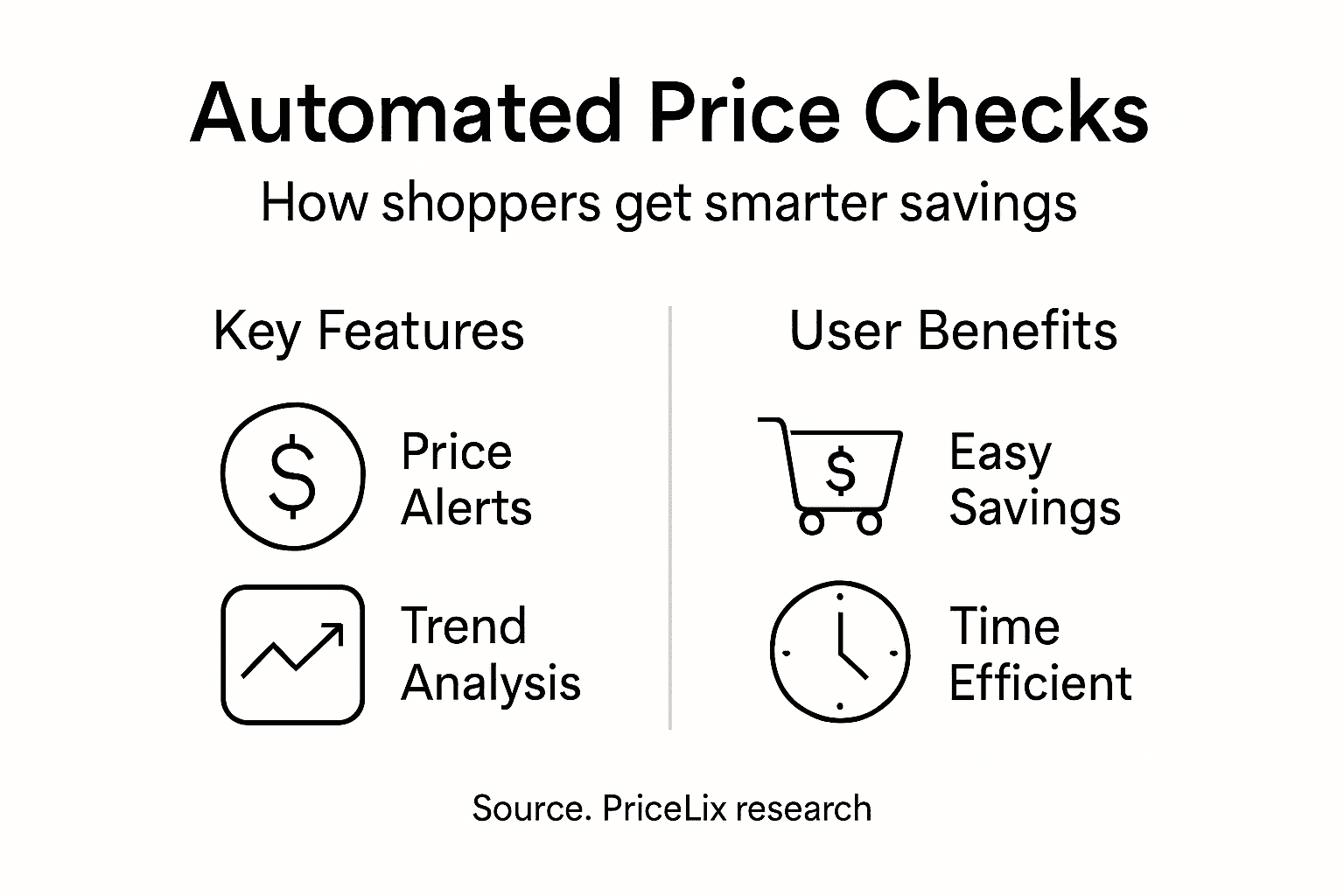
Key features of automated price checks include:
- Real-time price monitoring across multiple online stores
- Customizable price drop alerts
- Historical price trend tracking
- Comparison of prices from different retailers
- Notifications sent directly to your email or mobile device
The technology works by continuously scanning product listings and comparing current prices against historical data. When a significant price drop occurs, you receive an instant notification, enabling you to make informed purchasing decisions and maximize your savings.
Pro tip: Set multiple price alerts for the same product across different retailers to increase your chances of catching the absolute best deal.
Types of Automated Price Check Tools
In the world of online shopping, automated price check tools have evolved into sophisticated systems designed to help consumers and businesses make smarter purchasing decisions. AI-driven price monitoring software represents a significant leap forward in tracking product prices across multiple platforms with unprecedented accuracy and speed.
These advanced tools can be categorized into several distinct types based on their functionality and technological approach:
- URL-based trackers: Monitor specific product pages for price changes
- Channel-level monitoring: Track prices across entire product categories or retail channels
- Dynamic pricing solutions: Adjust prices in real-time based on market demand
- Competitor price tracking platforms: Continuously analyze pricing strategies of rival retailers
- Predictive analytics tools: Use machine learning to forecast future price trends
The most sophisticated price check tools integrate advanced features like real-time alerts, historical price trend analysis, and cross-platform comparison. These systems leverage complex algorithms to scan hundreds of websites simultaneously, providing consumers with comprehensive pricing intelligence that was previously impossible to obtain manually.

Most modern price tracking technologies go beyond simple price monitoring. They offer comprehensive price monitoring solutions that include demand prediction, competitive intelligence, and customizable alert systems tailored to individual shopping preferences.
Here’s a quick comparison of the main types of automated price check tools and their unique advantages:
| Tool Type | Core Function | Best Use Case | Typical Benefit |
|---|---|---|---|
| URL-based Tracker | Monitors individual product pages | Tracking specific items | Accurate price notifications |
| Channel-level Monitoring | Scans entire product categories | Shopping multiple brands | Broad price coverage |
| Dynamic Pricing Solution | Adjusts prices in real-time | Retailer price optimization | Maximizes profit margins |
| Competitor Price Platform | Analyzes rival retailers | Business intelligence | Strategic market response |
| Predictive Analytics Tool | Forecasts future price trends | Timing purchases | Anticipates optimal deals |
Pro tip: Choose a price tracking tool that offers multiple alert methods and supports a wide range of retailers to maximize your savings potential.
How Automated Price Monitoring Works
Automated price monitoring transforms how consumers and businesses track product pricing through advanced technological processes. AI-powered tracking systems leverage complex algorithms to continuously scan online marketplaces, collecting and analyzing pricing data with remarkable precision.
The price monitoring workflow typically involves several key stages:
- Web crawling: Automated tools scan multiple websites simultaneously
- Data collection: Gather pricing information from different online platforms
- Data standardization: Clean and normalize collected pricing data
- Machine learning analysis: Identify pricing trends and anomalies
- Alert generation: Notify users about significant price changes
Modern price monitoring technologies go beyond simple data collection. Automated price tracking workflows integrate sophisticated machine learning algorithms that can predict pricing trends, compare historical data, and provide actionable insights for consumers and businesses alike.
These intelligent systems work continuously, processing vast amounts of pricing information in real-time. By comparing prices across multiple platforms, they help users make informed purchasing decisions, identify the best deals, and track price fluctuations with unprecedented accuracy.
Pro tip: Configure your price monitoring tool to track multiple variants of a product to maximize your chances of finding the absolute best price.
Impact on Shopping Habits and Savings
Automated price monitoring is fundamentally transforming how consumers approach online shopping, creating a more strategic and informed purchasing landscape. AI algorithms reshape shopping experiences by personalizing product recommendations and dynamically adjusting pricing strategies to match individual consumer behavior.
The key impacts on shopping habits include:
- Increased price awareness: Consumers become more conscious of actual product values
- Reduced impulse buying: Real-time price tracking encourages more deliberate purchases
- Expanded comparison shopping: Easy access to comprehensive pricing information
- More strategic timing of purchases: Understanding price fluctuations and optimal buying windows
- Improved budget management: Better tracking of spending patterns and potential savings
Artificial intelligence enhances online shopping by providing personalized experiences that simplify decision-making and increase overall consumer satisfaction. These technologies offer unprecedented insights into pricing trends, helping shoppers make more informed choices and potentially save significant money over time.
While price monitoring tools provide substantial benefits, consumers should remain aware of potential limitations. The personalization can sometimes narrow product exposure, potentially limiting discovery of alternative brands or unexpected deals. Balancing automated insights with personal research remains key to maximizing savings.
Pro tip: Set multiple price alerts for the same product across different retailers to capture the most comprehensive savings opportunities.
Risks, Limitations, and Common Pitfalls
While automated price monitoring offers significant advantages, consumers must remain aware of potential drawbacks and risks inherent in these technologies. Dynamic pricing algorithms introduce complex challenges that can potentially harm consumer interests and create unexpected pricing complications.
Key risks and limitations of automated price monitoring include:
- Price discrimination: Algorithms may offer different prices to different users
- Potential algorithmic bias: Automated systems might unfairly manipulate pricing
- Data privacy concerns: Tracking technologies collect significant personal data
- Limited product diversity: Personalization can narrow product recommendations
- Overreliance on technology: Manual research becomes less frequent
The most significant concern revolves around the potential for subtle price manipulation. Automated systems can independently raise prices or facilitate tacit market collusion, creating an environment where consumers might unknowingly pay more despite believing they are saving money. These technological nuances require careful navigation and continuous consumer awareness.
Consumers should approach automated price monitoring as a tool, not an infallible solution. Maintaining a critical perspective, cross-referencing multiple sources, and understanding the limitations of algorithmic pricing will help mitigate potential risks and maximize genuine savings opportunities.
For reference, here are common consumer risks with automated price monitoring systems and ways to mitigate them:
| Risk Type | Potential Issue | Mitigation Strategy | Consumer Impact |
|---|---|---|---|
| Price Discrimination | Varying prices shown | Clear browser history before shopping | May pay higher costs |
| Data Privacy | Personal data collection | Use privacy-friendly tracking tools | Reduces exposure |
| Algorithmic Bias | Unfair pricing algorithms | Compare prices across multiple platforms | Avoid misleading deals |
| Limited Diversity | Narrow product recommendations | Manually search for alternatives | Discover more brands |
| Overreliance | Reduced manual research | Review deals independently | Stay informed |
Pro tip: Always compare prices manually across multiple platforms, even when using automated price tracking tools, to ensure you’re truly getting the best deal.
Take Control of Your Shopping with Automated Price Checks
The challenge of monitoring fluctuating prices across countless retailers can quickly become overwhelming. This article highlights how automated price checks empower shoppers to stay informed, avoid impulse buys, and capitalize on the best deals by tracking prices in real time and receiving instant alerts. If you want to eliminate the guesswork and frustration from your online shopping experience, PriceLix is the solution designed just for you.
PriceLix automates the entire price tracking process for thousands of products on popular platforms like Amazon, eBay, and Walmart. With detailed price history charts and customizable alerts, you gain clear insights into pricing trends so you never miss an opportunity to save. By consolidating all your tracked items into a simple dashboard, PriceLix saves you time and effort while helping you shop smarter.
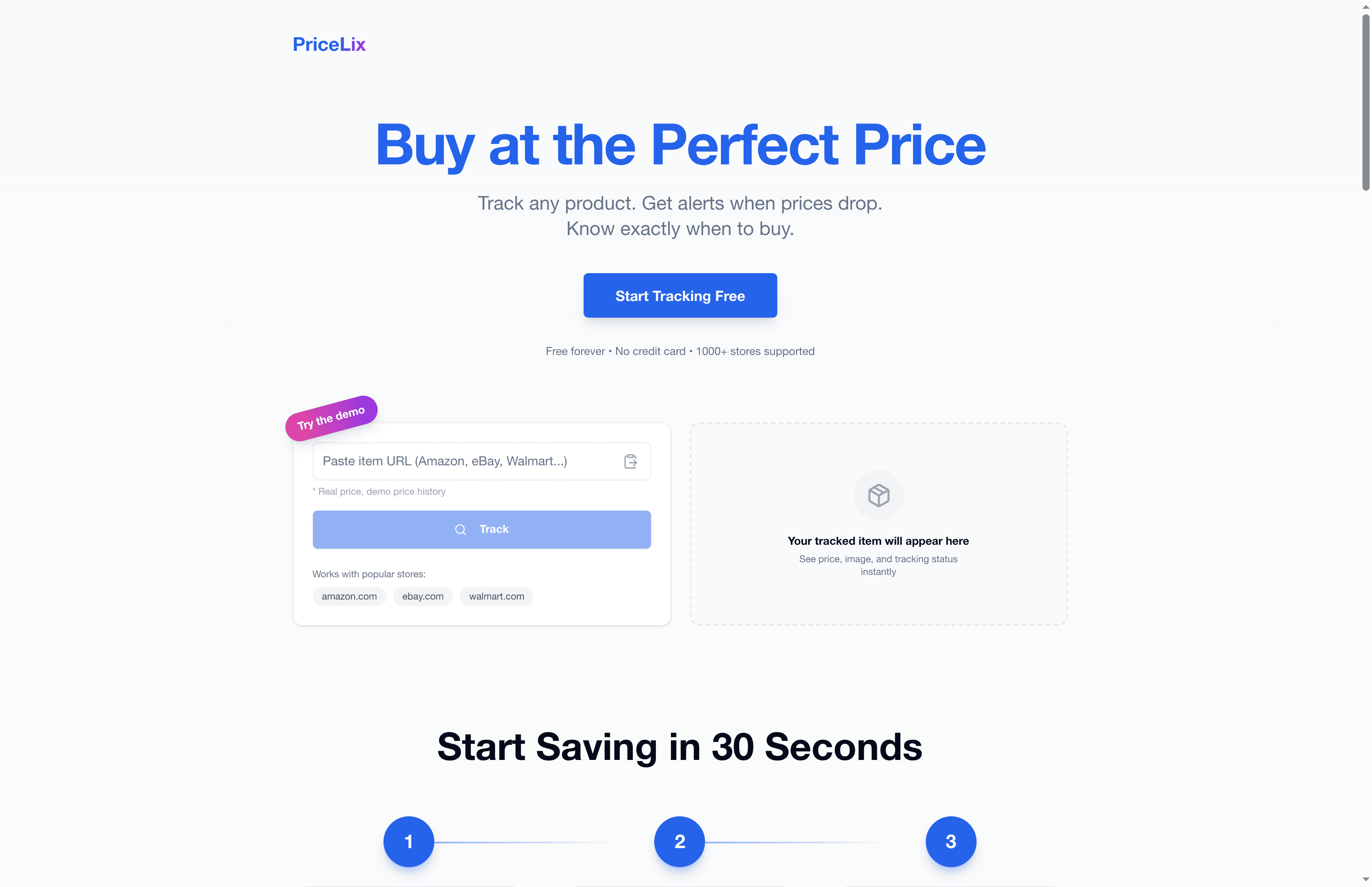
Ready to stop overpaying and start making confident buying decisions? Visit PriceLix today to experience hassle-free automated price monitoring. Discover how you can track prices automatically for your favorite products and receive instant notifications when prices drop. Don’t wait for the perfect deal — let PriceLix find it for you now.
Frequently Asked Questions
What are automated price checks?
Automated price checks are tools that continuously monitor product prices across multiple online retailers. They help consumers find the best deals by alerting them to significant price drops and tracking price trends.
How do automated price check tools work?
These tools use web crawling technology to scan multiple websites simultaneously, collecting pricing data. They analyze this data with machine learning algorithms to identify trends and generate alerts for users when prices change significantly.
What types of automated price check tools are available?
Automated price check tools can include URL-based trackers for specific product pages, channel-level monitoring for entire categories, dynamic pricing solutions that adjust based on market demand, and competitor price tracking platforms that analyze pricing strategies of rival retailers.
How can I maximize my savings using automated price checks?
To maximize savings, set multiple price alerts across different tools and for various products. This increases your chances of catching the best deals and ensures you receive notifications when prices drop to your desired level.