
Step-by-Step Guide to Monitoring Product Prices Online
Finding the right products to track for discounts can feel confusing, especially when online prices rise and fall with little warning. Choosing the best items for price monitoring means real savings, not wasted time chasing deals on things you rarely buy. By focusing on products with variable pricing and strong purchase motivation, you set yourself up to catch genuine bargains during major sales events while keeping your shopping list practical and your budget on track.
Table of Contents
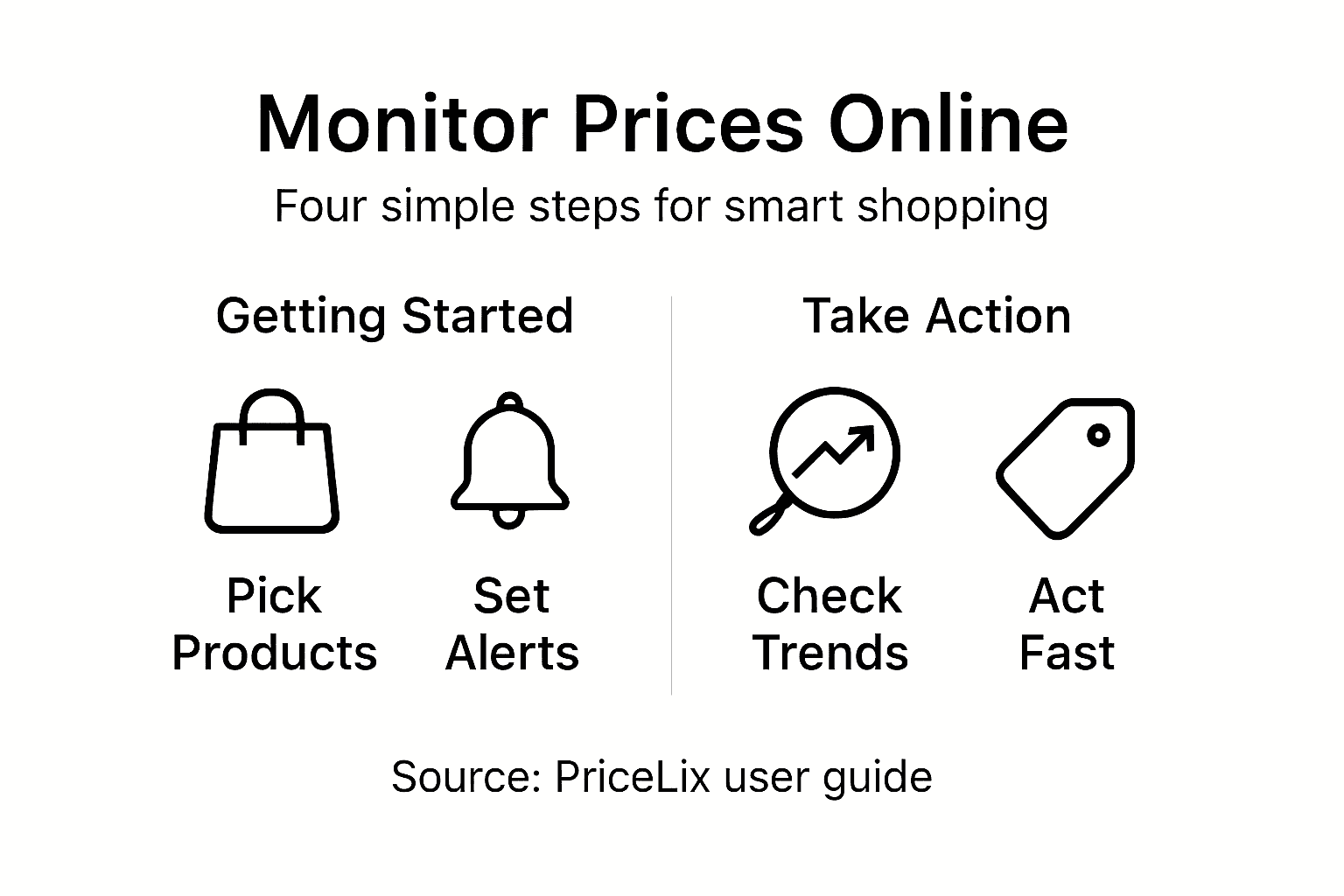
- Step 1: Select Products To Track For Discounts
- Step 2: Sign Up And Set Alerts With Pricelix
- Step 3: Review Price History And Analyze Trends
- Step 4: Act On Notifications To Maximize Savings
Quick Summary
| Key Point | Explanation |
|---|---|
| 1. Focus on frequently purchased items | Track products you regularly buy, as this ensures meaningful savings when prices drop significantly. |
| 2. Set realistic target prices | Establish target prices based on historical data, ensuring they are achievable to receive useful alerts. |
| 3. Analyze price trends carefully | Use historical price data to identify patterns and decide the best times to purchase products. |
| 4. Act swiftly on notifications | Promptly respond to price drop alerts to secure deals before they expire or inventory runs out. |
| 5. Keep a concise product list | Limit your tracking to 10 strategic items for effective monitoring and reduced notification overload. |
Step 1: Select products to track for discounts
Not all products are worth tracking. The key is choosing items that actually save you money when prices drop. You’re looking for products where you can realistically catch a deal and benefit from your monitoring efforts.
Start by thinking about what you regularly buy. These are your best candidates because you’ll use the products anyway. Groceries, household essentials, office supplies, clothing, and electronics are solid choices. When prices drop on items you purchase anyway, you’re guaranteed to benefit. Avoid one-off impulse buys or products you’re unsure about.
Consider consumer purchasing behavior and price sensitivity when deciding what to track. Focus on products that historically fluctuate in price. Some items stay relatively stable while others swing wildly depending on season, demand, or sales cycles. Research shows that frequently purchased products and seasonal items have the most variable pricing patterns, making them ideal candidates for tracking.
Here’s what makes a product worth tracking:
- High-ticket items where even a small percentage discount equals real savings
- Seasonal products that get cheaper during off-seasons or clearance periods
- Items you buy multiple times per year or repeatedly over time
- Products with variable pricing that change frequently across retailers
- Things on your wish list that you’re waiting to purchase at the right price
Avoid tracking clearance-only items or products nearing obsolescence. Also skip limited-edition goods unless you genuinely want them. The goal is tracking products where price tracking for maximum savings actually works over time.
Here’s a quick comparison of products that are most and least suitable for price tracking:
| Product Type | Price Variability | Tracking Benefit |
|---|---|---|
| Groceries | Moderate to high | Consistent savings |
| Electronics | High | Big discounts possible |
| Seasonal items | Very high | Major seasonal drops |
| Household essentials | Moderate | Useful long-term deals |
| Limited editions | Low | Rarely discounted |
| Obsolete/clearance goods | Low | Low future value |
Once you identify your products, create a focused list. Quality beats quantity here. Tracking 10 strategic items delivers better results than monitoring 100 random products. A smaller, intentional list keeps you engaged and makes price alerts actually useful instead of overwhelming your inbox.
Track products you buy repeatedly and items with genuinely variable pricing. These deliver real savings over time.
Pro tip: Start with 3 to 5 products you plan to purchase within the next 30 days. This builds momentum and shows you quick wins before expanding your tracking list.
Step 2: Sign up and set alerts with PriceLix
Creating your PriceLix account takes just a few minutes, and then you can start monitoring prices immediately. This is where your price tracking strategy actually comes to life.
Head to the PriceLix website and click the sign up button. You’ll need a valid email address and a password. That’s really it for account creation. No credit card required, no hidden fees. Once you confirm your email, you’re ready to start adding products.
Now comes the important part. With your account created, you’ll see your dashboard. This is your command center for all price tracking. Start by adding your first product using the search bar at the top. Type in the product name or paste the URL from Amazon, Walmart, eBay, or any of the thousand-plus supported retailers.
Here’s the step-by-step process for adding products and setting alerts:
- Search for or paste your product link into the search field
- Select the specific product from the results (match the exact color, size, or model)
- Click add to tracking or the tracking icon
- Set your target price (the price at which you want to be notified)
- Choose your alert preferences (email, push notification, or both)
- Confirm and save
The target price is crucial. This is where setting up price alerts for smarter shopping becomes strategic. Don’t set the target price too low or you’ll never get an alert. Look at the price history and set it 10 to 20 percent below the current price. If the product regularly drops 30 percent during sales, aim for that threshold.
You can add as many products as you want. Start with your first five and get comfortable with how alerts work before expanding. PriceLix will check prices daily across retailers and send you notifications when your target price is hit.
Set your target price realistically based on the product’s price history. Too low and you’ll miss the deal; too high and you’ll get flooded with alerts.
Pro tip: Enable push notifications in addition to email alerts so you catch price drops immediately and can purchase before inventory runs out.
Step 3: Review price history and analyze trends
This is where the real power of price tracking shows itself. Your PriceLix dashboard displays a price history chart for every product you’re monitoring. This chart tells the story of how prices move over time and where you should actually buy.
Open your first tracked product and look at the chart. You’ll see price fluctuations across different retailers and time periods. This visual snapshot matters because it reveals patterns that a single price point never could. Understanding trend analysis using historical data helps you spot when prices typically drop and when they spike.

Start by identifying the lowest price the product has reached. This tells you the realistic bottom threshold. Then look for the highest price. Most products oscillate between these points. If a laptop was $899 three months ago and $749 last month, you know the middle ground is around $800 to $850.
Spot these common price patterns:
- Seasonal drops that happen at the same time each year (back-to-school, holiday sales, clearance periods)
- Weekly fluctuations where prices dip on certain days (many retailers discount on Tuesdays or Thursdays)
- Launch price surges where new products start expensive then gradually drop
- Competitor matching where prices fall when rival retailers run promotions
- Inventory clearance where aging stock gets marked down sharply
Analyzing price history through trend analysis reveals long-term patterns that guide your purchasing decisions. Look at the chart’s trajectory over months, not days. A product trending downward overall suggests waiting longer. A product bouncing between the same range for months suggests now is a good time to buy.
Note any upcoming holidays or shopping events on your calendar. If Black Friday is coming and the product has historically dropped 40 percent then, waiting makes sense. But if the product never drops significantly, the 10 percent discount you’re seeing now might be as good as it gets.
Below is a summary of key signals from price history charts and recommended shopper actions:
| Price Chart Pattern | Shopper Action | Savings Potential |
|---|---|---|
| Seasonal dip | Wait for sale event | Highest |
| Weekly fluctuation | Shop on discount days | Moderate |
| Gradual price drop | Delay purchase | Growing opportunities |
| Price stability | Buy at current price | Low additional value |
The price history chart is your crystal ball. Use it to spot patterns, not just react to individual price drops.
Pro tip: Save screenshots of the price chart for products you’re seriously considering. This visual reference helps you remember the typical price range and avoid making emotional purchases when prices temporarily spike.
Step 4: Act on notifications to maximize savings
You’ve set up your alerts and now they’re coming in. The real moment of truth arrives when you receive a price drop notification. This is where most people stumble. They see the alert but don’t act fast enough, and the deal disappears.
When a notification lands in your inbox or pushes to your phone, treat it with urgency. You have a window of time, sometimes just hours, before the price rebounds or inventory sells out. Making timely purchasing decisions when price drops occur is the difference between saving money and missing the deal entirely.
Before you buy, verify a few quick things. Click the notification link to confirm the price is still accurate. Prices can change rapidly across retailers. Check the retailer’s shipping time and return policy. A product that costs $20 less but takes three weeks to arrive might not work for your timeline.
Here’s your action checklist when an alert comes through:
- Click the notification immediately to view the current price
- Compare the price across other retailers shown in PriceLix
- Check delivery timeframe and shipping costs
- Review the seller’s return policy and ratings
- Confirm you actually still want the product
- Complete your purchase while the price holds
The delay between receiving an alert and acting matters tremendously. Flash sales last minutes. Limited inventory drops vanish in hours. Responding swiftly to price opportunities supports better savings and prevents you from watching great deals disappear.
Don’t overthink the decision if the price aligns with your target. You set that target price for a reason. Trust your earlier analysis and commit. The products you’re tracking are items you plan to buy anyway, so seizing the deal makes perfect sense.
Keep a record of your purchases. Screenshot the order confirmation and note the savings amount. This reinforces how much you’re actually saving and motivates you to keep using the platform.
Speed matters. The first person to act on a price drop usually gets the best deal.
Pro tip: Set your phone notifications to “high priority” so price alerts never get buried in your notification center and you catch deals before they expire.
Unlock Smarter Shopping with PriceLix Today
The challenge of tracking prices and timing purchases perfectly is real. This guide highlights how difficult it can be to monitor fluctuating prices, analyze detailed price histories, and act quickly on discounts to truly maximize savings. If you find yourself overwhelmed by endless tabs or missing out on deals because you cannot track multiple retailers efficiently you are not alone. The pain points of choosing the right products to track, setting realistic alert prices, and responding fast to notifications can be solved with the right tools.
PriceLix removes this hassle by automating price monitoring for your favorite products across thousands of stores including Amazon Walmart and eBay. With its easy-to-use dashboard and real-time alerts you get immediate notifications when your target price is reached. Visual price history charts help you analyze trends so you know exactly when to buy without guesswork or overpaying. Instead of manually chasing discounts trust PriceLix to track products for you and act instantly.
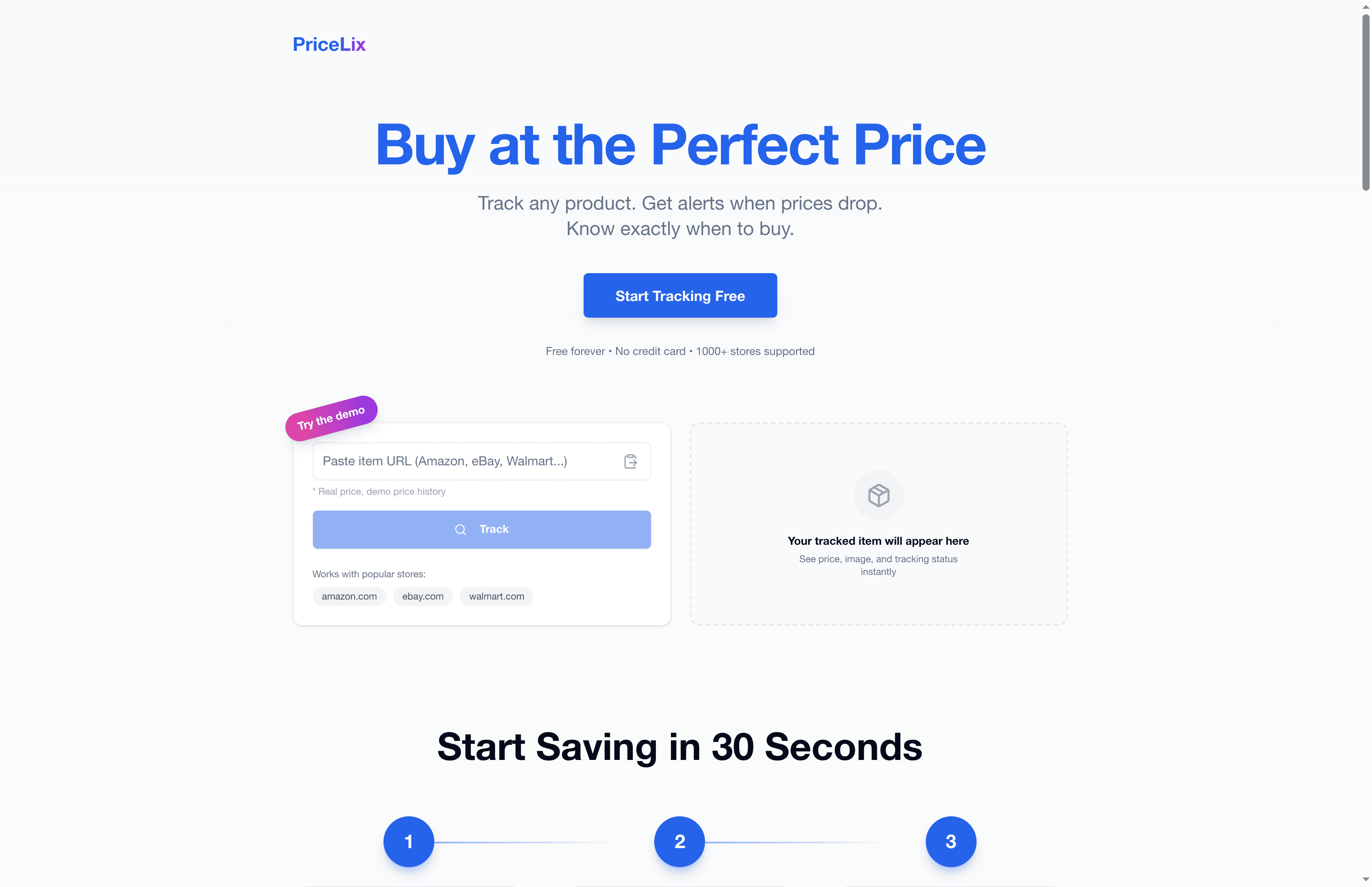
Ready to take control of your online shopping and never miss a discount again Discover how PriceLix can simplify your price tracking and multiply your savings. Start by signing up at PriceLix to streamline your shopping strategy and get real results. Don’t wait for the next sale event act now to turn price alerts into actual savings. Your wallet will thank you.
Explore more about how to set up price alerts and how price tracking works, then start your journey to smarter shopping today.
Frequently Asked Questions
How do I choose which products to track for price monitoring?
To choose products for price monitoring, focus on items you purchase regularly and that have a history of fluctuating prices. Start by creating a list of 3 to 5 essential items that you plan to buy within the next 30 days.
What steps do I take to set up price alerts after signing up?
After signing up, use the search bar to find your product and select it from the results. Then, click ‘add to tracking,’ set your target price, choose your alert preferences, and save your settings to start receiving notifications when prices drop.
How can I analyze price history effectively?
To analyze price history effectively, open your tracked product on your dashboard and review the price history chart. Look for the lowest and highest prices and identify patterns to determine the best times to buy, such as seasonal trends or typical sale days.
What should I do when I receive a price drop notification?
When you receive a price drop notification, act quickly by clicking the alert to verify the current price. Then, compare prices across retailers, check shipping times, and complete your purchase while the price is still favorable.
How many products should I track at once for maximum savings?
It’s best to track about 10 to 15 products at once to stay focused and engaged. Prioritize your list and add more products gradually as you become comfortable with monitoring the prices effectively.
How often does the price tracking tool check for price changes?
The price tracking tool checks prices daily across various retailers. This frequent monitoring ensures you receive timely notifications when your target price is reached, allowing you to catch the best deals.