
6 Must-Know Price Drop Strategies for Smart Online Shoppers
Snagging the best online deal can feel like chasing a moving target. Prices change without warning, inventory disappears fast, and spending hours checking countless stores leaves you exhausted and empty-handed. Consumers and businesses alike know that missing a quick price drop sometimes means missing your one shot at real savings.
The good news is there are proven ways to catch deals at the perfect moment without the stress or guesswork. You will discover practical approaches like automation, custom alerts, and price history charts that turn chaotic shopping into predictable wins. Each strategy is designed to help you act faster, compare smarter, and buy with more confidence.
Keep reading and get ready to transform how you shop. The following insights will show you how to save money, time, and energy on your next purchase.
Table of Contents
- 1. Track Real-Time Prices with Automation Tools
- 2. Set Custom Alerts for Specific Product Drops
- 3. Leverage Price History Charts for Informed Timing
- 4. Compare Across Multiple Stores Before Buying
- 5. Capitalize on Seasonal and Holiday Sales Events
- 6. Use Wishlist and Cart Tactics for Extra Discounts
Quick Summary
| Takeaway | Explanation |
|---|---|
| 1. Use Automation Tools for Price Tracking | Leverage AI technology to monitor prices and receive instant alerts on drops, saving time and ensuring timely purchases. |
| 2. Set Custom Alerts for Target Prices | Tailor notifications to your desired price points, ensuring you only respond to significant discounts that matter for your budget. |
| 3. Analyze Price History Charts | Utilize price trajectory data to identify trends and the best timing for purchases, reducing impulse buying based on temporary discounts. |
| 4. Compare Prices Across Multiple Retailers | Always assess total costs, including shipping and seller reputation, across several retailers before purchasing to ensure the best overall deal. |
| 5. Take Advantage of Seasonal Sales Events | Plan ahead for major sales like Black Friday to capitalize on discounted prices, maximizing savings during high-traffic shopping periods. |
1. Track Real-Time Prices with Automation Tools
Manually checking prices across dozens of websites is exhausting and impractical. Automation tools eliminate that burden by tracking prices for you around the clock, alerting you the moment a price drops.
Automation works by using AI technology to monitor prices continuously across multiple retailers. When a price changes, you receive an instant notification so you can act fast before stock runs out or the deal ends.
These tools integrate seamlessly into your shopping routine without requiring any technical skills or coding knowledge. Simply add products you want to track, set your target price, and let the software do the heavy lifting.
How Real-Time Tracking Works
Real-time price monitoring means prices are checked frequently, sometimes multiple times per day. Automated price tracking tools use AI to adjust automatically whenever retailers update their websites, ensuring you never miss a price change.
You get several key benefits from automation:
- Instant alerts notify you the moment prices drop
- No manual checking required saves hours each month
- Track hundreds of products simultaneously across thousands of stores
- Data collection and analytics show price trends over time
- Forecast future prices based on historical patterns
Many online shoppers waste money by checking prices sporadically or missing brief price windows. With automation, you respond within minutes of a price drop, not days later.
Staying Competitive with Price Intelligence
Automation tools provide competitive pricing intelligence that keeps you ahead. When you understand price patterns and timing, you buy strategically instead of reactively.
These tools track competitor prices frequently, giving you visibility into market movements. You’ll discover when prices typically drop, which months offer the best deals, and which retailers tend to cut prices first.
Automated price monitoring ensures you capture savings opportunities the moment they appear, turning reactive shopping into informed decision-making.
The intelligence becomes even more valuable during major retail events. Black Friday, Cyber Monday, and seasonal sales involve rapid price changes. Automation captures every fluctuation while you sleep or work.
Pro tip: Set multiple price alerts for the same product across different retailers, then activate when the lowest price appears, giving you options to compare shipping costs and stock availability alongside the final price.
2. Set Custom Alerts for Specific Product Drops
Not all price drops matter equally. A 5 percent discount on a $20 item saves you a dollar, while the same percentage off a $500 laptop saves you $25. Custom alerts let you target the deals that actually move the needle for your budget.
Custom alerts work by setting a specific price threshold that matches your target. You tell the system exactly what you’re willing to pay, and it notifies you only when that price arrives. This eliminates noise from minor fluctuations and keeps your inbox focused on real opportunities.
Setting up alerts takes minutes and requires no technical skills. Most tools allow you to specify the exact price point, choose your notification method, and select which retailers to monitor. You stay in complete control of what triggers an alert.
How Custom Thresholds Work
Custom price alerts form a critical part of a proactive shopping strategy that helps you avoid overpaying. When you set thresholds based on your research, you make informed purchasing decisions rather than impulse buys.
Here’s what you can customize:
- Target price point you’re willing to pay
- Which retailer or retailers to monitor
- Notification method (email, text, app notification)
- Price history tracking across multiple stores
- Multiple alerts for the same product at different price points
For example, if you research a product and determine the lowest price historically was $149, you set an alert at that price. When it drops to $149 or below, you receive an instant notification.
Real Action When Prices Hit Your Target
The magic happens when alerts trigger at your exact price point. You receive a notification immediately, giving you a time advantage over shoppers who check prices manually.
This approach prevents two costly mistakes. First, you never miss your target price because the system watches 24/7. Second, you avoid settling for mediocre discounts when patience would earn you substantially better savings.
Prices can change rapidly during sales events. Automated price drop notifications reduce manual tracking effort and enhance your ability to purchase at exactly the right moment before inventory sells out.
Custom alerts transform you from a reactive shopper chasing any discount into a strategic buyer who captures only the deals that truly matter.
Pro tip: Set your alert price 5 to 10 percent below the lowest historical price you found, ensuring you only buy during genuinely exceptional sales rather than settling for ordinary discounts.
3. Leverage Price History Charts for Informed Timing
Price history charts transform guesswork into strategy. Instead of hoping you caught a good deal, you’ll see exactly what prices looked like over weeks or months, revealing patterns that guide your purchase timing.
Charts show you the full price trajectory for any product. You can spot seasonal trends, identify when prices typically drop, and understand what constitutes a genuinely exceptional deal versus a mediocre discount. This historical perspective prevents you from celebrating a 10 percent discount when the product drops 30 percent every quarter.
Most price tracking tools display charts automatically, showing price movements over days, weeks, months, or even years. The longer the timeframe you examine, the clearer the patterns become.
Reading Charts Like a Seasoned Shopper
Price history data helps you understand past trends to make more informed purchase timing decisions. When you study these patterns, you shift from reactive to strategic shopping.
Here’s what to look for in a price chart:
- Lowest price ever recorded for that product
- Highest price to understand the full range
- Average price throughout the tracking period
- Seasonal spikes or drops tied to holidays or events
- Recent price movements and current trajectory
For example, a laptop might show a pattern of dropping $100 to $150 every January after the holiday shopping rush ends. If you see that pattern clearly in the chart, waiting until January becomes a smart financial decision.
Avoiding Impulsive Decisions Through Data
Price charts eliminate the emotional component of shopping. When you see cold, hard data showing a product dropped to this price five times in the past year, you can confidently wait for it to happen again.
You’ll also catch deals that are genuinely rare. If a chart shows the lowest price was $89, and you see it drop to $79, you know that’s an exceptional opportunity worth acting on immediately.
Research shows that understanding past price trends helps you avoid making poor timing decisions driven by urgency or fear of missing out. Charts show you the objective reality of pricing patterns.
Price history charts become your shopping oracle, revealing the truth about what prices are normal, exceptional, and worth waiting for.
Pro tip: Focus on the lowest price point over the past three to six months rather than the all-time low, since older data may reflect discontinued versions or outdated models that aren’t directly comparable to current inventory.
4. Compare Across Multiple Stores Before Buying
The same product costs wildly different amounts across retailers. A speaker that’s $79.99 at one store might be $89.99 at another, or $69.99 at a third. Comparing before you buy is the difference between overpaying and capturing real savings.
Price comparison works by gathering product information from multiple online retailers simultaneously. Instead of visiting Amazon, Walmart, eBay, and a dozen other stores individually, price comparison systems aggregate data in one place, showing you all available options instantly.
This unified approach saves tremendous time and money. You evaluate prices, shipping costs, seller ratings, and availability all at once instead of tab-hopping for hours.
Why Store-to-Store Differences Matter
Retailers use different pricing strategies based on their costs, margins, and inventory levels. Even identical products carry price tags that vary by 10, 20, or even 30 percent across stores.
Consumers use comparison platforms to assess alternatives and influence their purchase decisions across multiple store options. This means your willingness to compare directly shapes what you actually pay.
Here’s what varies between retailers:
- Base product price
- Shipping costs and speed options
- Seller reputation and return policies
- Bundle deals or package offers
- Membership discounts (Prime, Walmart Plus, etc.)
- Stock availability and delivery timeframes
A product might be cheaper at Store A but have expensive shipping, making Store B the true bargain when you calculate total cost. Comparisons reveal these hidden expenses.
Making Smart Comparisons That Stick
When comparing, focus on total cost to your door, not just the sticker price. A $10 price advantage means nothing if shipping costs an extra $15.
Also verify you’re comparing identical products. Sometimes prices differ because one listing includes accessories while another doesn’t, or because different sellers are offering new versus refurbished versions.
Check seller ratings and return policies alongside price. The cheapest option from an unknown seller with a terrible return record might create headaches that cost you more than the savings.
Comparing across multiple stores transforms shopping from a guessing game into a data-driven decision, ensuring you capture the lowest total cost available.
Pro tip: Compare prices across at least three different retailers, then wait 24 hours before purchasing to verify prices haven’t dropped further, since prices can shift multiple times daily across different stores.
5. Capitalize on Seasonal and Holiday Sales Events
Black Friday. Cyber Monday. Prime Day. Christmas. These events aren’t random spikes in discounts. Retailers plan massive promotions around them, and you can capture extraordinary savings if you’re strategically prepared.
Seasonal and holiday events drive predictable shopping cycles where retailers discount heavily to move inventory and capture customer spending. Promotional intensity peaks around major events like Christmas, influencing both retailer pricing and your purchase timing strategy.
These events offer something regular shopping cannot: coordinated, store-wide discounts that stack benefits across multiple retailers simultaneously. The competition between sellers intensifies, pushing prices lower than any other time of year.
Understanding When and Why Sales Happen
Retailers use data analytics and AI to forecast demand during peak periods, tailoring their strategies accordingly. This means discounts aren’t accidents. They’re calculated business moves designed to maximize sales volume during high-traffic shopping windows.
Major seasonal and holiday events include:
- Black Friday and Cyber Monday (November)
- Thanksgiving sales (November)
- Christmas and year-end promotions (December)
- New Year sales (January)
- Amazon Prime Day (July and October)
- Back-to-school sales (August)
- Presidents Day sales (February)
- Mother’s Day and Father’s Day promotions (May and June)
Cultural traditions and psychological factors drive consumer buying behavior during these periods, meaning retailers expect surges in traffic and prepare accordingly with aggressive pricing.
Planning Your Holiday Shopping Strategy
Waiting for seasonal events means capturing savings that dwarf regular discounts. A product that rarely drops below 15 percent off might drop 40 percent during Black Friday. That’s the difference between paying $85 and $60 for a $100 item.
Start preparing weeks in advance by creating wishlists and setting price alerts. E-commerce sales surge dramatically during seasonal campaigns, so early preparation gives you advantage in competition with millions of other shoppers.
Track which product categories typically see the deepest discounts during each event. Electronics and home goods drop steeply during Black Friday. Apparel drops deeper during seasonal clearance events. Knowing these patterns guides your strategic buying.
Seasonal and holiday sales transform expensive purchases into achievable goals, turning dreams into reality through coordinated, predictable discount cycles.
Pro tip: Set price alerts two months before major sales events for items on your wishlist, then track whether prices dip gradually beforehand or drop sharply on sale day—this reveals whether waiting until the official event date will yield better savings.
6. Use Wishlist and Cart Tactics for Extra Discounts
Retailers know a secret: when you add items to your cart or wishlist, you’re signaling serious buying intent. They exploit this by sending targeted discounts to recover your abandoned items. Smart shoppers turn this tactic around, using wishlists and carts as tools to unlock savings.
When you save items without purchasing, retailers want you back. They send promotional emails offering discounts on those exact products, sometimes within hours. This behavior reflects your shopping intention, and savvy retailers use it to nurture your interest and boost conversion rates.
You can weaponize this psychology. Save high-priced items you’re considering, then wait for the discount email. Many times, retailers will offer 10, 15, or even 20 percent off just to bring you back.
How Abandoned Cart Psychology Works
Cart abandonment happens when shoppers add items but don’t complete purchases. Retailers view this as lost revenue and actively work to recover it through targeted promotions and personalized remarketing campaigns.
Understanding cart and wishlist tactics helps you capture these recovery discounts:
- Add items to your cart but don’t checkout
- Use retailer wishlists to save products for later
- Sign up for retailer email lists for cart abandonment offers
- Wait 24 to 48 hours for discount emails to arrive
- Check your email for exclusive recovery incentives
- Apply promotional codes to items still in your cart
This isn’t dishonest. You’re using the same tools retailers designed to drive sales. The difference is, you’re doing it strategically.
Timing Your Cart Strategy for Maximum Savings
Not every abandoned cart triggers a discount email. High-value items and popular products are more likely to generate recovery offers than cheap items. Focus your tactic on products priced above $50 where percentage discounts create meaningful savings.
Placing items in carts indicates genuine shopping intent that retailers can leverage through personalized promotions and remarketing. Your cart signals value to merchants, making them more likely to incentivize you with discounts.
Timing matters too. Adding items on weekdays might trigger emails within 24 hours. Adding on Friday might mean waiting until Monday for outreach. Some retailers send multiple follow-up emails over several days, each with potentially better offers.
Wishlists and carts transform you from a passive shopper into an active negotiator, leveraging retailer psychology to unlock discounts you wouldn’t otherwise receive.
Pro tip: Add items to your cart or wishlist, then wait 48 hours before checking email for abandonment discounts, since retailers typically send their best recovery offers within this window to win back hesitant shoppers.
Below is a comprehensive table summarizing productive strategies and tools related to automated price tracking and strategic shopping.
| Strategy | Description | Key Benefits |
|---|---|---|
| Real-Time Price Tracking | Automate price monitoring across retailers, using AI to notify users of price drops. | Saves time and ensures timely purchasing decisions. |
| Custom Price Alerts | Set target price thresholds to receive specific notifications on deals. | Focuses on meaningful discounts relevant to budget. |
| Price History Analysis | Use charts to understand historical pricing trends. | Enables informed decision-making and strategic timing. |
| Store Comparison Tools | Compare prices, shipping, and seller ratings across multiple retailers. | Ensures selection of the most cost-effective option. |
| Seasonal Sales Planning | Prepare for holiday sales events with early price tracking and list-building. | Helps generate substantial savings during high discount events. |
| Wishlist and Cart Tactics | Save items without purchasing to leverage potential abandonment discounts. | Encourages targeted offers from retailers for additional savings. |
Unlock Smarter Savings with PriceLix Price Tracking and Alerts
When you want to master the art of catching the best deals from real-time price monitoring to custom alerts tuned exactly to your budget, the challenge is clear: how do you track multiple products across stores without exhausting time and missing critical drops? This article reveals the power of automation, price history insights, and strategic shopping during major sales, yet putting these ideas into action can feel overwhelming. That is where PriceLix turns those smart shopper strategies into effortless wins.
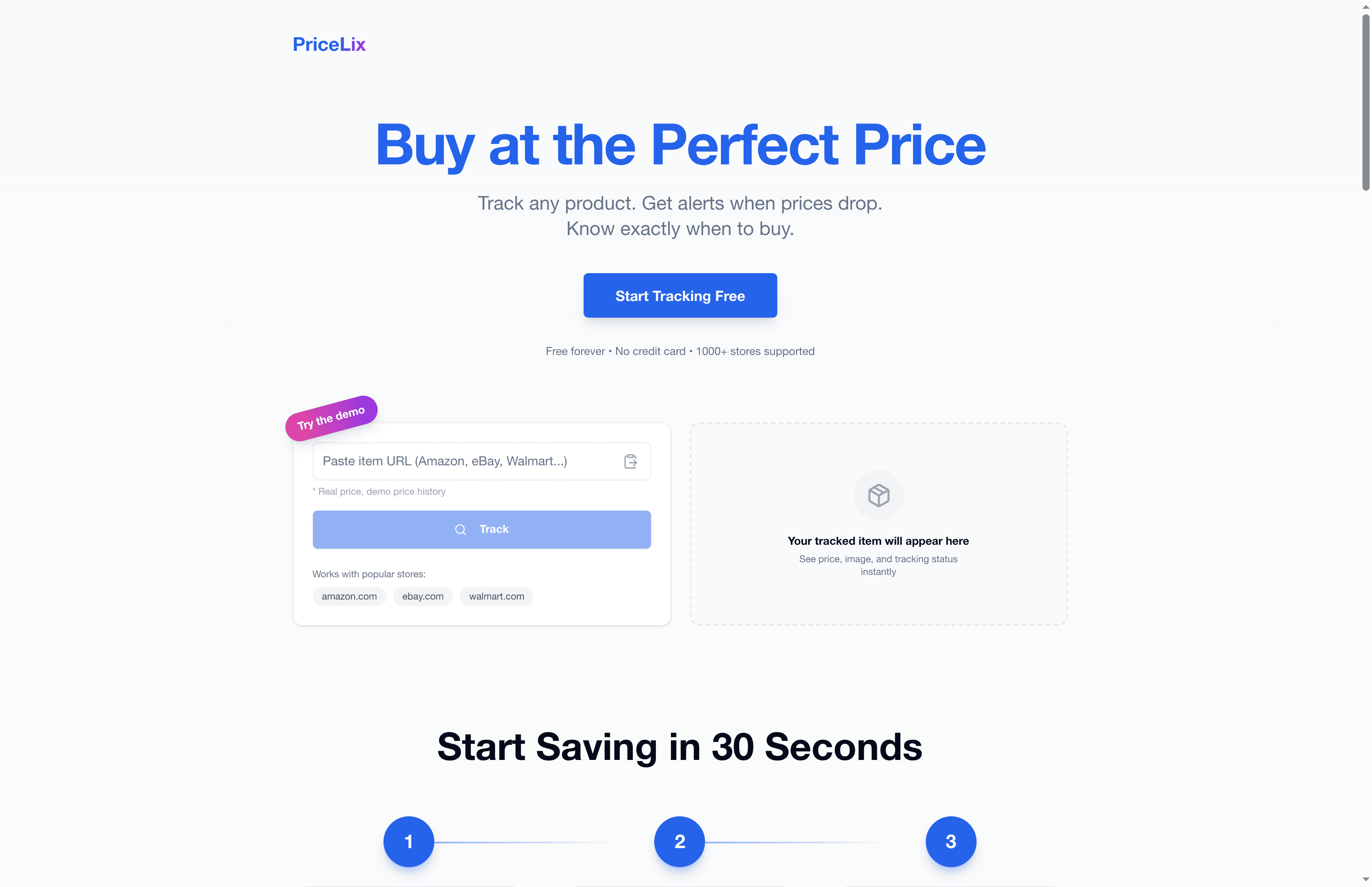
With PriceLix you can automate the continuous monitoring of thousands of products across popular retailers including Amazon, eBay, and Walmart. Receive instant notifications when prices hit your personalized targets so you never miss a real savings opportunity. Dive into detailed price history charts to understand seasonal pricing trends and confidently plan your purchases around major events like Black Friday or Prime Day. Stop overpaying by comparing prices and shipping costs all in one user-friendly dashboard designed for busy shoppers who want maximum impact with minimal hassle.
Experience smarter buying today by exploring how Price Tracking with PriceLix brings the proven strategies from this guide directly to your fingertips. Take control of your shopping decisions and start saving in real time now at https://www.price-lix.com/.
Frequently Asked Questions
How can I track real-time price drops automatically?
You can track real-time price drops by using automation tools that constantly monitor prices across multiple online retailers. Simply set your desired products, define your target price, and receive instant alerts when the prices change.
What are custom alerts, and how do they work?
Custom alerts allow you to set a specific price threshold for products you want to buy. When the price meets or drops below your set threshold, you’ll receive a notification, helping you only act on significant deals that align with your budget.
How do I use price history charts to make informed buying decisions?
Price history charts reveal the price trends of products over time, so you can identify seasonal discounts and average pricing. Use these charts to decide when to buy by observing patterns, like waiting for a product to reach its historically low price.
Why is it important to compare prices across multiple stores?
Comparing prices across multiple stores ensures you pay the lowest total cost for a product, factoring in shipping and seller reputation. Focus on at least three different retailers to make sure you find the best option available before making a purchase.
How can I maximize savings during seasonal and holiday sales events?
To maximize savings during seasonal and holiday sales, prepare a wishlist and set price alerts weeks in advance. This way, you can take advantage of deep discounts that usually occur during these promotions, ensuring you capture the best deals as they arise.
What tactics can I use with wishlists and carts to get extra discounts?
To unlock extra discounts, add items to your wishlist or cart without completing the purchase. Wait for retailers to send promotional emails offering discounts on those items, which often occur within 24 to 48 hours after you show buying interest.