
Price Trends: Making Smarter Online Purchases
Shopping online can feel like a constant guessing game, especially when everyday products seem to jump in price from one day to the next. With retailers using complex algorithms, the same item can have entirely different costs depending on where and when you shop. Recognizing these patterns is your key to smarter spending as online prices show greater volatility than offline ones, giving watchful shoppers new chances to save if they know how to track and respond.
Table of Contents
- How Price Trends Shape Online Shopping
- Types of Price Changes and Tracking Methods
- Key Features of Price Monitoring Tools
- Practical Implications for Savvy Shoppers
- Avoiding Common Mistakes and Misconceptions
Key Takeaways
| Point | Details |
|---|---|
| Understand Price Trends | Recognizing patterns in price changes helps inform smarter purchasing decisions. |
| Use Price Tracking Tools | Implement tools for real-time alerts and historical price analysis to optimize buying strategies. |
| Compare Total Costs | Assess total ownership costs, including shipping and taxes, rather than focusing solely on headline prices. |
| Avoid Common Mistakes | Be aware of unreliable data, unclear price targets, and the importance of reviews to enhance decision-making. |
How Price Trends Shape Online Shopping
Price trends are the hidden forces that dictate when you should buy and when you should wait. They’re not random fluctuations—they’re patterns that repeat, and understanding them changes everything about how you shop online.
Consumers increasingly access detailed historical price information during online shopping, which shifts purchasing decisions in predictable ways. When you see a single large price drop or a series of small increases climbing upward, your instinct is to buy immediately. You’re thinking: “Prices are going up, better grab this now.” That’s exactly how price trends influence buying decisions.
The reverse is equally powerful. A big price jump or consecutive small decreases signal something different: patience pays off. You delay, expecting further drops. This behavior is predictable. Retailers know this.
Here’s where it gets interesting. Online prices exhibit significantly higher volatility than offline ones, driven by algorithmic pricing strategies that adjust prices constantly across locations and retailers. A product might be $24.99 on Amazon while the same item sits at $27.50 on Walmart. By next week, those prices shift again.
Why does this matter to you?
- Higher volatility creates opportunity. Prices change frequently, meaning better deals appear regularly if you’re watching.
- The same product costs different amounts simultaneously. Location-based pricing and competitor adjustments mean comparison shopping actually saves money.
- Your perception of value depends on price history. Seeing the historical low shapes what feels “expensive” or “cheap” in the moment.
Price trends reveal when retailers are competing, when demand spikes, and when inventory pressure forces discounts—all signals that smart shoppers can exploit.
Pro tip: Track the same products across multiple retailers for at least two weeks before buying to spot your store’s unique pricing patterns and identify which retailers typically offer the best deals on items you buy regularly.
Types of Price Changes and Tracking Methods
Price changes don’t all look the same. Some are dramatic. Others creep up slowly. Knowing which pattern you’re seeing helps you decide whether to buy now or wait for better timing.
Prices shift in distinct ways. A large single drop hits suddenly—a product jumps from $89 to $49 overnight. That’s different from a series of small increases, where the price climbs $2 or $3 every few days. Your buying instinct differs for each pattern.

These patterns matter because price changes influence how consumers time purchases. When you spot a large decrease, you buy immediately, fearing prices will rise again. When prices tick up gradually, the same fear kicks in. But consecutive small decreases? You wait, expecting more drops ahead.
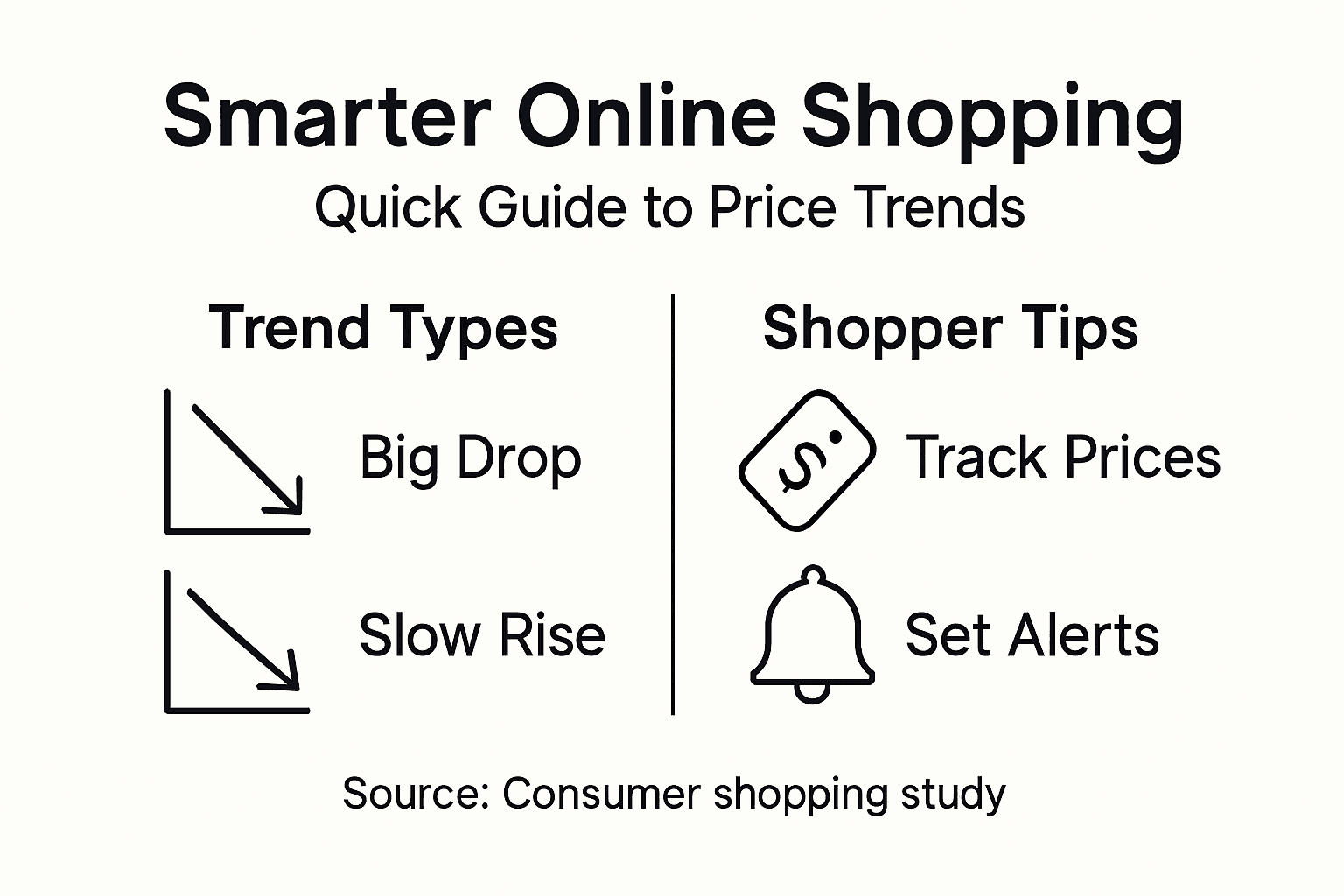
Here’s a quick reference comparing common online price change patterns and how they influence shopping decisions:
| Price Change Pattern | Typical Shopper Response | Optimal Buying Strategy |
|---|---|---|
| Large single price drop | Urgent purchase, fear of rebound | Buy soon, monitor for brief sales |
| Series of small increases | Rush to buy before price rises | Act quickly if trend continues |
| Consecutive small decreases | Wait for further drops, patience | Delay, track for lowest price |
| Sudden price spike | Hold off, expect normalization | Avoid purchase, watch for a return |
Tracking these changes requires the right tools and methods. Here’s what works:
- Retailer platforms show price history directly on product pages, revealing how often prices shift and historical lows.
- Third-party price trackers aggregate data across multiple stores, showing you where the same item costs less.
- Automated monitoring captures frequent price changes, discounts, and stickiness patterns that reveal market dynamics.
Why does tracking frequency matter? Prices change constantly online. A product might hold steady for weeks, then drop by 25% on a Tuesday. Without tracking, you miss these windows entirely.
The most successful online shoppers don’t rely on memory—they track systematically, spotting patterns others miss and acting when timing aligns with their budget.
Different tracking methods reveal different insights:
- Daily price checks catch regular shifts and identify your retailer’s typical discount timing.
- Price history analysis shows whether a current price is actually a good deal or merely average.
- Cross-retailer comparison reveals which stores compete aggressively on items you buy frequently.
Pro tip: Set price alerts for products you regularly buy at your most-visited retailers to learn their unique discount patterns—most retailers repeat seasonal sales and discount cycles that predictably repeat each year.
Key Features of Price Monitoring Tools
Not all price monitoring tools are created equal. The best ones share specific features that separate casual price checkers from serious savings machines. Understanding what to look for ensures you’re actually getting value.
Real-time alerts are non-negotiable. When a price drops on your watched item, you get notified immediately—not hours later. This speed matters because deals vanish quickly, especially during sales events. Without instant notifications, you’re reacting too late.
Frequent data collection powers everything else. Top tools check prices multiple times daily, not once. Why? Retailers change prices constantly. Morning and evening rates differ. Weekend versus weekday pricing varies. More frequent checks catch these shifts and identify true lows versus temporary dips.
Price monitoring tools deliver real-time data analytics that let you see patterns others miss. You’re not just watching numbers—you’re spotting trends. Is this product rising across all retailers or just one? When does your preferred store typically discount?
Here’s what separates effective monitoring systems:
- Customizable alerts let you set triggers for your price targets, not just any decrease.
- Competitor benchmarking shows how your item compares across multiple stores simultaneously.
- Historical price charts reveal whether today’s price is actually a deal or average.
- Multi-channel support tracks prices across Amazon, Walmart, eBay, and thousands of other retailers.
Effective price management requires measuring success across multiple dimensions. The best tools integrate data from diverse sources, showing you company-wide and product-level insights. You can see pricing power, margin preservation, and whether your purchases align with your budget targets.
A good monitoring tool doesn’t just tell you the price dropped—it explains whether this is a seasonal low, competitor-driven, or inventory-clearing discount.
Anti-bot technology matters more than most shoppers realize. Retailers block automated requests to protect servers. Quality tools have workarounds that bypass these blocks while staying ethical, ensuring data accuracy across all retailers.
Pro tip: Choose a tool with customizable alert thresholds so you only get notifications when prices hit your target, reducing alert fatigue while ensuring you never miss genuinely good deals on items you actively want.
To clarify how price monitoring tools differ, here’s a comparison of essential features and their benefits:
| Feature | Why It Matters | Shopper Benefit |
|---|---|---|
| Real-time alerts | Quick response to deals | Catch fleeting discounts |
| Historical price charts | See price trends | Identify if current price is low |
| Competitor benchmarking | Compare across retailers | Ensure best value, not just price |
| Customizable thresholds | Personalized notifications | Avoid alert fatigue, target goals |
Practical Implications for Savvy Shoppers
Understanding price trends isn’t just academic knowledge—it changes how you actually shop. The insights you’ve learned now translate into concrete actions that save real money on your purchases.
Your shopping behavior shapes how much you pay. Convenience, product variety, competitive pricing, and retailer trustworthiness influence your decisions, but price trends are the hidden variable that separates smart buying from average spending. You’re not just choosing what to buy—you’re choosing when to buy it.
Timing matters more than most realize. Knowing price patterns lets you anticipate deals before they arrive. You’re not reacting to discounts; you’re predicting them. This shift from reactive to proactive transforms your entire shopping strategy.
Here’s how this knowledge applies to real shopping:
- Track items before you need them. Start monitoring prices weeks or months ahead of when you plan to purchase.
- Recognize seasonal patterns. Electronics drop after holidays. Outdoor gear discounts come before seasons change. Furniture goes on sale predictably.
- Compare across retailers systematically. Don’t assume your favorite store always has the best price—they often don’t.
- Use price alerts to capture opportunities. Let automation work while you live your life, notifying you when your target price hits.
Smarter purchase timing transforms your budget. Understanding price elasticities and consumer preferences helps you make cost-effective decisions across product categories. You’re not just buying cheaper—you’re buying strategically.
The difference between impulse buyers and savvy shoppers isn’t willpower—it’s information and timing. One acts on emotion; the other acts on data.
Where most people lose money:
- Buying out of convenience instead of comparing options across stores.
- Ignoring price history and thinking current prices are baseline.
- Purchasing without alerts and missing better deals that arrived days later.
- Rushing expensive purchases when you could wait weeks for seasonal drops.
Implement these practices immediately:
- Start tracking three products you buy regularly before your next purchase.
- Set price alerts at 15-20% below the current price to see how often they trigger.
- Compare prices across at least three retailers for your next major purchase.
Pro tip: Create a “watch list” of products you might eventually buy but don’t need immediately—this generates baseline price data that reveals seasonal patterns and typical discount windows specific to your shopping preferences.
Avoiding Common Mistakes and Misconceptions
Most online shoppers think they’re making smart buying decisions when they’re actually falling into predictable traps. Understanding these pitfalls protects your wallet and prevents wasted time chasing fake deals.
The biggest mistake? Comparing prices without considering the complete picture. You see a product for $15 cheaper on Store A and assume you’ve found the winner. But you ignored shipping costs, taxes, return policies, and item condition. Common price comparison mistakes include using outdated data and ignoring external factors like taxes and shipping.
Total cost of ownership matters more than headline price. A product costing $50 with free shipping beats one priced $45 with $12 shipping. Yet most shoppers focus only on that first number and wonder why they didn’t save as much as expected.
Another critical error: trusting unreliable data sources. Not all price tracking tools are accurate. Some pull stale information. Others miss price updates entirely. This leads you to think you found a deal when the price actually changed hours ago.
Here are the mistakes that cost you money:
- Ignoring quality alongside price. The cheapest option isn’t always the best value if it fails after months of use.
- Buying without checking customer reviews. Reviews reveal hidden costs like poor durability or difficult returns.
- Failing to adapt your strategy. Market conditions change—your approach should too.
- Setting vague price targets. Without clear goals, you’ll constantly second-guess whether to pull the trigger.
Frequent errors involve lack of clear goals and insufficient competitive research, leading to missed opportunities and suboptimal decisions. You need both direction and information.
The worst shopping mistake isn’t overpaying once—it’s building habits that consistently leave money on the table across dozens of purchases.
Specific misconceptions to abandon:
- “The lowest price is always the best deal.” Sometimes mid-range pricing includes better quality or faster shipping.
- “Price drops are permanent.” Prices often bounce back up after short sales windows.
- “Checking once is enough.” Prices shift constantly; one-time comparisons become outdated within days.
- “My favorite retailer has the best prices.” Loyalty doesn’t equal value—compare every significant purchase.
Protect yourself moving forward:
- Compare total cost of ownership, not just headline price.
- Verify data freshness—check when prices were last updated.
- Read customer reviews before deciding between similar-priced options.
- Set clear price targets and stick to them rather than chasing every minor drop.
Pro tip: Before finalizing any purchase over $50, spend five minutes checking the same product on two competing retailers and reading at least three recent customer reviews to verify you’re getting true value, not just a cheap price.
Take Control of Your Shopping with Smart Price Tracking
Understanding price trends is vital to becoming a savvy online shopper. The problem many face is missing out on optimal buying times because of constant price volatility and complex discount patterns. This leads to frustration, overspending, and impulsive purchases. You want to track large price drops and series of small decreases with ease so you can buy at the perfect moment without constantly checking multiple stores.
PriceLix empowers you to overcome these challenges by automating the monitoring process across thousands of retailers including Amazon, Walmart, and eBay. With real-time alerts and detailed price history charts, you no longer guess if today’s price is truly a deal or just average. This platform tailors the experience to your personal shopping goals by helping you spot trends and triggers for purchasing opportunities.
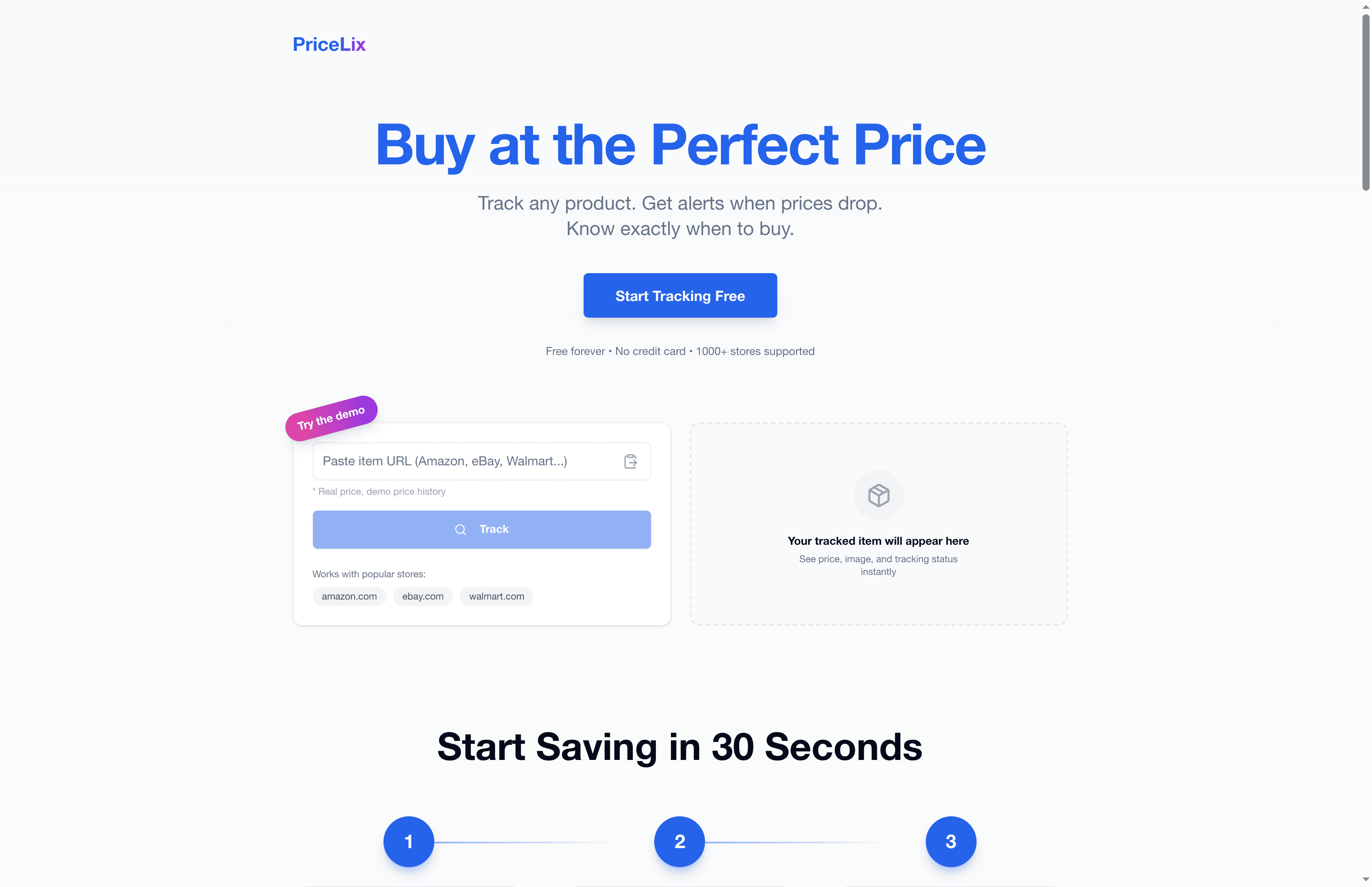
Join thousands of smart shoppers who have transformed their buying strategies by tracking products automatically instead of relying on memory or inconsistent checks. Start your journey toward smarter purchases and greater savings now at PriceLix. Don’t wait until prices rise again—discover how monitoring and understanding price trends can maximize your budget today.
Frequently Asked Questions
What are price trends and why are they important for online shopping?
Price trends refer to the patterns of price changes over time. They are essential for online shopping because understanding these trends helps consumers determine the best time to buy, potentially saving them significant money.
How can I track price changes for products I want to buy?
You can track price changes by using retailer platforms that show price history, employing third-party price trackers that compare prices across multiple stores, or setting up automated monitoring tools that alert you to significant price changes.
What should I do if I see a large price drop for a product?
If you notice a large price drop, it’s typically a good idea to purchase the item promptly, as prices may rise again. Monitor the price for a brief period for any temporary deals before finalizing your purchase.
How can I avoid common pitfalls when comparing prices for a product?
To avoid pitfalls, consider the total cost of ownership, including shipping and taxes, not just the product price. Verify the freshness of price data and read customer reviews to ensure you’re making a well-informed decision.