
Real-Time Price Changes Explained: Maximizing Savings
Finding the lowest price on Amazon, eBay, or Walmart often feels like chasing a moving target. For budget-conscious shoppers, real-time price changes make every decision more complicated but also open doors to bigger savings. Retailers adjust prices instantly based on supply, demand, and competitors, creating opportunities to score the best deals. This guide explains how dynamic pricing models shape the prices you see and how understanding these changes unlocks smarter shopping during key sales events and seasonal discounts.
Table of Contents
- What Real-Time Price Changes Mean Online
- Why Real-Time Prices Matter to Your Wallet
- The Real Impact on Your Shopping Behavior
- How to Turn Real-Time Pricing to Your Advantage
- Types of Dynamic Pricing and Algorithms
- How Algorithms Make Pricing Decisions
- Why Understanding These Mechanisms Matters
- Key Drivers of Instant Price Adjustments
- What Triggers Price Changes Most Often
- How to Predict Price Changes Using These Drivers
- Impact on Shoppers: Risks and Rewards
- Who Wins and Who Loses
- How to Shift from Risk to Reward
- Smart Tools for Tracking and Saving
- What Features Matter Most
- Using Tools Strategically
- The Automation Advantage
Key Takeaways
| Point | Details |
|---|---|
| Understand Real-Time Pricing | Prices fluctuate constantly due to dynamic pricing models employed by retailers responding to demand and competition. Be aware that each price change might not reflect a ‘sale.’ |
| Strategic Shopping Techniques | Use price tracking tools to monitor price changes and set alerts for desired targets. This allows you to purchase items at optimal times, saving money in the process. |
| Be Aware of Psychological Triggers | Recognize that urgency and scarcity tactics may push you to make impulsive purchases. Understanding these tactics helps you make informed decisions. |
| Shift from Reactive to Strategic | Move from being a passive shopper to an informed strategist by learning price trends and monitoring different retailers for the best deals. |
What Real-Time Price Changes Mean Online
Prices on Amazon, eBay, Walmart, and thousands of other online stores don’t stay fixed. They shift constantly throughout the day and night, responding to market forces you might never see. This is real-time pricing, and understanding how it works is the first step toward becoming a smarter, more strategic shopper.
Real-time price changes happen because retailers use dynamic pricing models. Rather than printing a price tag and keeping it the same for weeks, online stores adjust prices based on immediate market conditions including supply, demand, competitor pricing, and inventory levels. When a product is selling fast and stock runs low, prices climb. When demand softens or competition intensifies, prices drop. These adjustments can happen multiple times per hour, creating constant flux in what you see on your screen.
The psychology behind real-time pricing affects how you make buying decisions. Research on how real-time price changes influence consumer behavior reveals something fascinating: when you spot a significant price drop, you feel pressure to buy immediately, worried prices will rebound. Conversely, if you see prices climbing, you may delay your purchase hoping they’ll fall. This creates a behavioral loop that retailers understand and exploit. They know your instinct is to chase the lowest price, but also to fear missing out when prices rise.
Understanding that retailers control prices in real-time shifts your perspective from passive shopper to informed strategist.
Why Real-Time Prices Matter to Your Wallet
The stakes of real-time pricing are tangible. A laptop that costs $899 on Monday might be $799 on Wednesday, then back to $850 by Friday. Over a year of purchases, the difference between tracking prices strategically and shopping randomly adds up to serious money. Budget-conscious shoppers who understand real-time pricing dynamics can save 15% to 40% on their annual e-commerce spending, depending on what they buy and how patient they are.
Retailers employ real-time pricing for specific reasons:
- Rationing scarce goods during high demand (think holiday shopping or product launches)
- Triggering supply responses by making high prices signal that stock is needed
- Correcting demand forecast errors when they misjudged how popular something would be
- Competing directly by undercutting competitors within minutes of price changes
- Testing price sensitivity to find the sweet spot where they maximize revenue
For you, this means prices are in constant motion. The item you looked at yesterday might be cheaper today, or pricier. Without tracking tools, you’re flying blind.
The Real Impact on Your Shopping Behavior
When you see a large price drop, you experience a sense of urgency. You feel like you’ve found a deal and worry it won’t last. This is real, and it’s by design. Retailers use flash sales and limited-time discounts to trigger this exact response. The problem: you might buy something you didn’t actually need, or pay more than you would have if you’d waited a few days.
The opposite happens when prices trend upward. You assume they’ll keep rising, so you hesitate to buy. But often, that price spike is temporary. It might drop again within 48 hours. Without visibility into price history and trends, you can’t distinguish between a genuine upward trend and a temporary fluctuation.
The retailer doesn’t owe you their lowest price for today—they’re selling at the price that maximizes their profit right now.
This is why tracking price history matters. When you can see that a product fluctuates between $50 and $75 every two weeks, you know $65 is not a deal worth chasing. You can wait for the next dip to $50. But without that data, $65 looks like “on sale” compared to the $75 you saw last month.
How to Turn Real-Time Pricing to Your Advantage
Real-time pricing isn’t your enemy once you understand the game. Several tactics shift the advantage to you:
- Track prices over time to establish the true range for items you want (not just the current price)
- Set alerts at your target price so you don’t have to check manually multiple times daily
- Monitor trends to understand whether prices are genuinely declining or just fluctuating
- Compare across retailers because the same product can vary by $20 to $100 depending on where you buy
- Identify seasonal patterns so you know when prices typically drop for specific product categories
Tools like price tracking platforms automate this work. Instead of visiting each store daily, you receive alerts when prices hit your target. This removes emotion from the buying decision and ensures you never overpay just because you weren’t watching.

Pro tip: Start tracking items you plan to buy in the next 30 to 90 days right now, even before you’re ready to purchase—this builds a data foundation of normal price ranges so you’ll recognize true bargains when they appear.
Types of Dynamic Pricing and Algorithms
Online retailers don’t just pick a price and hope it sticks. Behind every fluctuation you see is a system of algorithms and pricing strategies designed to maximize profit while responding to market conditions in real-time. Understanding these different types helps you recognize patterns and predict when prices might drop.
Retailers use several distinct approaches to dynamic pricing, each powered by different data inputs and decision-making logic. Time-based pricing adjusts prices according to the time of day, day of the week, or season. A hotel might charge more on Friday nights and less on Tuesday afternoons. Retailers apply the same logic—electronics often drop in price on Tuesday mornings when less traffic means less urgency to buy. Demand-based pricing raises or lowers prices directly based on how many people want a product right now. When a new phone launches, prices stay high because demand is crushing supply. Within weeks, as demand normalizes, prices fall. Competitor-based pricing monitors what rivals are charging and adjusts automatically. If Amazon drops a price, Walmart’s system detects it within minutes and undercuts it. This creates the constant back-and-forth you observe where prices shift multiple times daily.
These strategies work because algorithms process market data continuously, analyzing customer behavior, inventory levels, competitor moves, and historical trends. Modern systems use artificial intelligence to forecast demand more accurately and adjust prices with precision that humans couldn’t achieve manually. The algorithms don’t guess—they learn from thousands of data points and adapt in real-time.
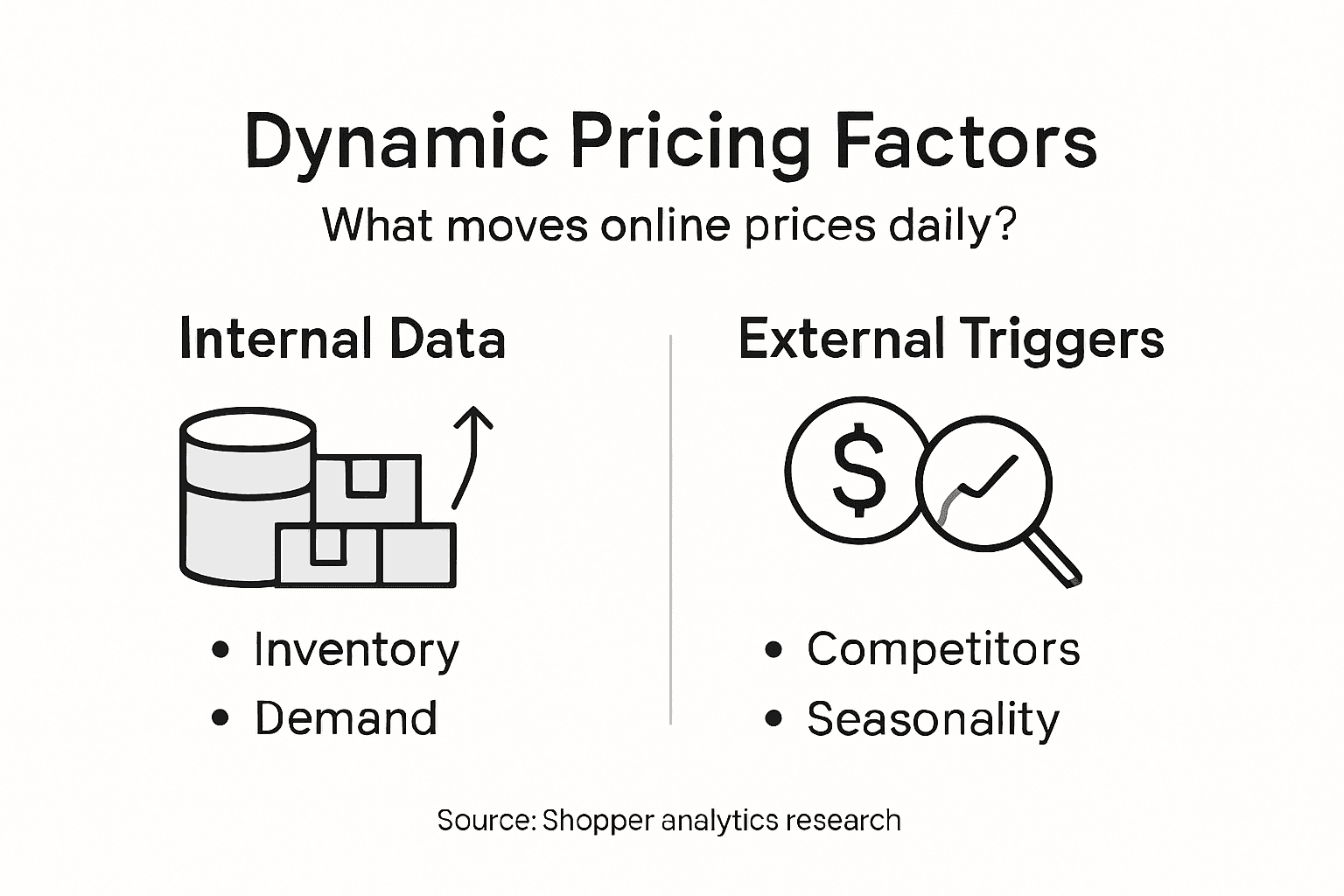
Here’s a summary of the most common dynamic pricing strategies used by online retailers:
| Pricing Strategy | How It Works | Typical Impact on Prices | Example Scenario |
|---|---|---|---|
| Time-Based | Adjusts by hour/week/season | Higher prices during peak times | Electronics cheaper on Tuesdays |
| Demand-Based | Reacts to demand fluctuations | Prices rise when demand spikes | New phone launch uprates |
| Competitor-Based | Matches rivals’ pricing shifts | Constant price battles | Amazon vs Walmart adjustments |
| Inventory-Based | Monitors stock levels | Low stock increases price | Last units cost more |
| Forecast Correction | Updates after prediction errors | Slashes prices for overstock | Surplus goods discounted |
The algorithm doesn’t care if you feel a price is fair; it cares whether that price maximizes revenue.
How Algorithms Make Pricing Decisions
Algorithmic pricing operates on a simple principle: maximize profit per item, or maximize total revenue. The system chooses one goal and optimizes for it relentlessly. Here’s what happens behind the scenes:
- Data collection pulls in real-time information about inventory, competitor prices, search traffic, cart abandonment rates, and customer demographics
- Predictive modeling forecasts future demand and estimates price elasticity (how many sales you lose for each dollar increase)
- Optimization calculates the price point that generates the highest profit or revenue
- Execution updates the price on the website within seconds
- Monitoring tracks results and adjusts if the algorithm’s prediction was wrong
The sophistication varies widely. Small retailers might use simple rules: “If inventory is above 500 units, drop price by 10 percent.” Large retailers use machine learning that identifies patterns no human could spot. They might discover that customers are more price-sensitive on Sundays, or that a 3 percent price drop triggers a 15 percent sales increase for certain products, but an 8 percent drop triggers a 16 percent increase (meaning the smaller drop is better for profit).
This is why the same product can have a different optimal price on different days. Monday might call for $79 to clear inventory before the weekend. Wednesday might be $89 because fewer people are shopping, so demand is lower and the algorithm can charge more to the customers who are actually looking.
Why Understanding These Mechanisms Matters
Knowing that algorithms drive pricing changes shifts your approach to shopping. You stop assuming prices move randomly and start recognizing patterns. If you know demand-based pricing is in effect, you understand that buying during peak hours (evening, weekends) means paying peak prices. Shop Tuesday morning instead, when traffic is lower and algorithms lower prices to stimulate sales.
You also understand that competitor-based pricing means prices can shift dramatically in response to external events you control nothing about. When Amazon has a flash sale, other retailers’ algorithms automatically react. But this same mechanism works in your favor if you’re patient. Prices that spike up during high-demand moments typically fall back down when that moment passes.
The key insight is this: algorithms are predictable because they follow rules and data. Once you understand the rules, you can anticipate moves.
Pro tip: Set up price tracking alerts for items you want, then monitor the price history graph to spot whether prices follow a weekly cycle, seasonal pattern, or competitor-responsive jumps—this reveals which pricing strategy applies and when you should expect the next drop.
Key Drivers of Instant Price Adjustments
Prices don’t change randomly. Behind every shift is a specific trigger that the algorithm detects and responds to within seconds. Understanding what causes these adjustments helps you predict price movements and time your purchases strategically.
The most immediate driver is supply and demand imbalance. When demand spikes suddenly, inventory shrinks fast. Retailers raise prices to slow down sales and protect stock for later. When demand drops and shelves overflow, they cut prices to clear inventory before it becomes stale. External events create these sudden shifts: a viral social media post about a product, a competitor’s flash sale, or even weather events. If a snowstorm is coming, heating supplies sell out and prices jump. When the storm passes and demand evaporates, prices collapse. The system responds in real-time because prices adjust based on market supply and demand shifts, not on a fixed schedule.
A second major driver is forecasting error correction. Retailers predict how much of a product they’ll sell, but predictions are imperfect. If they overestimated demand and have too much inventory, they slash prices to move stock before it sits unsold for weeks. If they underestimated and inventory is nearly gone, they raise prices to maximize profit from the scarce remaining units. These corrections happen constantly because demand is unpredictable—a competitor’s move, a change in consumer confidence, or a celebrity endorsement can shift what people want to buy.
Real-time pricing exists because standing prices can’t match the speed at which markets actually change.
What Triggers Price Changes Most Often
In your day-to-day shopping, you encounter these drivers repeatedly:
- Inventory levels are the most visible driver; products near zero stock command premium prices while overstock items get discounted aggressively
- Competitor pricing moves trigger automatic responses within minutes; if a rival drops price, the system matches or undercuts instantly
- Day of the week cycles follow predictable patterns; weekends see higher prices because traffic is heavier, while slow days get discounts
- Seasonal demand shifts cause systematic changes as certain products become desirable (winter coats in fall, swimming gear in spring)
- New product launches create price spikes on related items as demand concentrates on the newest model and older inventory needs to move
- Upcoming deadlines affect pricing; Black Friday gets heavier markdowns on slower items, while last-minute holiday shopping sees fewer discounts
Each driver operates independently, but they stack. You might see a price drop because inventory is high (driver one) and it’s Tuesday (driver two). Then a competitor cuts price, triggering a further drop (driver three). Understanding which driver is at play helps you decide whether to buy now or wait.
How to Predict Price Changes Using These Drivers
You can anticipate moves by monitoring what’s changing in the market around a product you’re tracking. If inventory suddenly appears in stock after being out for weeks, expect prices to fall as the retailer works to clear it. If a competitor is running a heavy promotion, other retailers’ algorithms will react within hours. If a product is approaching its seasonal decline (summer clothes in August), markdowns accelerate.
The key is recognizing that retailers are responding to concrete data points, not guessing. They’re not hoping prices work out. They’re adjusting to real conditions they observe. By watching those same conditions—inventory, competitor moves, search traffic—you can often predict what the algorithm will do before it happens.
This is why tracking price history reveals patterns that feel random at first but become obvious once you have weeks or months of data. You see that a product always drops 8 percent on Tuesdays, or falls 15 percent once inventory hits a certain level. These patterns are the algorithm’s response to drivers you can learn to recognize.
Pro tip: When you see a price spike, check the inventory status and competitor prices before panicking—if inventory is actually high or competitors are pricing lower, the spike is temporary and prices will fall back within 24 to 48 hours as the algorithm corrects.
Impact on Shoppers: Risks and Rewards
Real-time pricing creates a paradox for online shoppers. The same system that enables massive savings for strategic buyers can trap unsuspecting shoppers into overpaying repeatedly. Understanding both sides of this equation is critical to tipping the scales in your favor.
The reward side is straightforward: when you time purchases correctly, you save significantly. A laptop marked down during a demand slump could save you $150 to $300 compared to buying during peak season. The ability to see how real-time price changes influence buying decisions means informed shoppers can recognize genuine deals and avoid fake urgency. If you know a product typically ranges between $40 and $60, seeing it at $45 doesn’t trigger panic buying—you recognize it as normal, not a steal. Patients who understand price patterns gain control over their shopping and save 15 to 40 percent annually compared to impulse buyers.
The risk side is where most shoppers get hurt. Real-time pricing creates psychological pressure that works against you. When you see a price spike, fear kicks in. You assume prices will keep climbing, so you buy immediately to avoid paying more later. But that spike was often temporary. If you’d waited 24 hours, prices might have dropped 10 to 15 percent. Even worse, the system exploits urgency by showing you items in your cart with countdown timers: “Only 2 left in stock!” This pressure causes impulse purchases you regret.
The difference between winning and losing with real-time pricing often comes down to whether you’re reacting emotionally or deciding strategically.
Who Wins and Who Loses
Real-time pricing creates winners and losers based on a simple factor: flexibility and knowledge. Research on distributional impact of real-time pricing shows that shoppers who can shift their purchases to off-peak times and lower prices gain substantial savings. Those who can’t adapt, or who lack knowledge about price patterns, often pay premium prices.
Winners typically have these characteristics:
- Time flexibility to shop on slow days (Tuesday mornings instead of Friday evenings)
- Willingness to wait rather than buying the moment they spot something they want
- Knowledge of price patterns so they recognize real deals versus artificial urgency
- Multiple store options to compare prices and shift purchases between retailers
- Price tracking tools that alert them when prices hit target levels
Losers often face these challenges:
- Time constraints from work or family obligations that force purchases during peak hours
- Impulsive tendencies that make them susceptible to countdown timers and scarcity messaging
- Limited awareness of typical price ranges and seasonal patterns
- Fewer shopping alternatives due to location, budget, or product availability
- Manual price checking that exhausts time and attention, leading to buying just to end the search
How to Shift from Risk to Reward
The gap between these two groups isn’t permanent. You can move from the losing side to the winning side by adopting specific practices. Start by building price history awareness. Track items you want to buy and watch their patterns over two to four weeks. You’ll see the range they naturally fluctuate within. This data becomes your defense against artificial urgency.
Second, develop intentional buying schedules. If you can, shift discretionary purchases to off-peak times. Shopping on Tuesday morning instead of Friday evening can save 5 to 10 percent on average. For essential purchases you can’t delay, set price alerts at your target price and commit to buying only when that threshold is hit, regardless of artificial scarcity messaging.
Third, use price tracking tools to monitor key purchases automatically. This removes the emotional element. You stop refreshing a product page obsessively and start receiving notifications when prices genuinely drop. The automation shields you from psychological manipulation.
Final step: compare across retailers before every purchase. The same product varies by $20 to $100 between stores because their algorithms make different decisions. One retailer might have higher inventory and lower prices while another is clearing stock at premium rates. Five minutes of comparison shopping often reveals better deals than the first store you checked.
Pro tip: Track at least three to five items you plan to buy over the next month right now, before any purchase urgency hits—this gives you real price history data to reference when you’re tempted to buy, making you resistant to artificial scarcity and false discounts.
Smart Tools for Tracking and Saving
Manually monitoring prices across dozens of products and retailers is exhausting. You’d need to visit each store multiple times daily, compare prices in spreadsheets, and somehow remember which product was cheapest where. This is why smart price tracking tools exist. They automate the entire process, doing the heavy lifting while you focus on shopping strategically.
Modern price tracking tools use data analytics and AI algorithms to monitor prices across thousands of retailers in real-time. These platforms don’t just show you today’s price; they track historical data, identify patterns, and predict future movements. When a price hits your target, they send you an alert. When a product drops significantly, you get notified instantly. The result: you never overpay because you’re never guessing when to buy. Smart tools collect and analyze real-time data to help you identify timely deals and maximize savings while improving your shopping efficiency.
The best tools integrate with your shopping habits seamlessly. You tell them what you want to buy, set your target price, and receive alerts when that price is hit. Some tools track across multiple retailers simultaneously, so you see the lowest price available anywhere, not just at one store. Others specialize in specific categories like electronics, clothing, or groceries. The sophisticated ones use machine learning to predict when prices will drop based on historical patterns, inventory levels, and competitor moves.
The difference between spending two hours comparing prices manually and receiving one alert is the difference between information overload and actionable intelligence.
What Features Matter Most
Not all price tracking tools are created equal. When choosing one, focus on these critical features:
- Real-time price monitoring across multiple retailers so you’re never checking stale data
- Price history charts showing how prices have moved over weeks or months, revealing true patterns
- Customizable alerts set at your target price, not the retailer’s sale price
- Cross-retailer comparison so you see the lowest price available, not just one store’s offer
- Mobile notifications that reach you immediately when prices drop, even when you’re not actively shopping
- Price prediction showing whether prices are likely to drop further or rise soon
- Inventory tracking so you know when stock is low and prices might spike
The most valuable tools combine several of these. A tool that shows price history but doesn’t send alerts forces you to check manually. A tool that sends alerts but doesn’t show history leaves you blind to whether that “great deal” is actually normal pricing. The best combinations automate both tracking and alerting.
The following table highlights how price tracking tools can help shoppers save more:
| Tool Feature | Shopper Benefit | Business Impact |
|---|---|---|
| Price History Charts | Recognize true sale vs normal | More informed decision-making |
| Custom Alerts | Buy only at chosen price | Reduces impulse purchases |
| Cross-Retailer Compare | Find lowest price across sites | Increases savings opportunities |
| Price Predictions | Time purchases strategically | Avoids buying at peak prices |
Using Tools Strategically
Tools amplify your savings when used correctly. Start by tracking items you plan to buy in the next 30 to 90 days before purchase pressure hits. This builds a foundation of price history so you recognize real deals when they appear.
Set your target price based on historical data, not the current price. If a product has ranged between $50 and $75 over the past month, your target should be near the lower end, around $50 to $55. This prevents you from buying at $70 thinking it’s a deal when it’s actually premium pricing.
Use how to track online prices for maximum savings as guidance for setting up effective tracking. Monitor the alerts you receive and learn from patterns. You’ll start noticing that certain products always drop on specific days or that certain retailers consistently undercut competitors. This knowledge becomes your unfair advantage.
Compare alerts across multiple tools if you use more than one. Some tools miss certain retailers or product categories. Overlapping coverage ensures you’re seeing all available prices, not just a subset. Five minutes setting up tracking pays dividends across hundreds of purchases over time.
The Automation Advantage
Automation removes emotion from buying decisions. You stop refreshing product pages obsessively and stop second-guessing whether to buy now or wait. The tool handles both decisions: it alerts you when your target price is hit, and that becomes your buying signal. No more wondering if you should wait one more day.
Automation also protects against analysis paralysis. Without tools, comparing 15 retailers is overwhelming. With tools, you get the answer in one glance. This frees mental energy and reduces decision fatigue, making shopping faster and less stressful.
Pro tip: Set up tracking for items you want to buy, then ignore the product pages completely—only check when you receive an alert that prices hit your target, removing the psychological pressure of constant price watching and impulse buying.
Master Real-Time Price Changes with Smart Tracking from PriceLix
Understanding how prices shift minute by minute online can feel overwhelming. The article highlights how dynamic pricing algorithms, real-time alerts, and psychological triggers create a confusing shopping environment where prices rise and fall rapidly. If you have ever felt pressured to buy immediately or worried about missing out during flash sales and sudden discounts, you are not alone. The key to turning these challenges into savings is tracking price history, setting target price alerts, and staying ahead of pricing patterns.
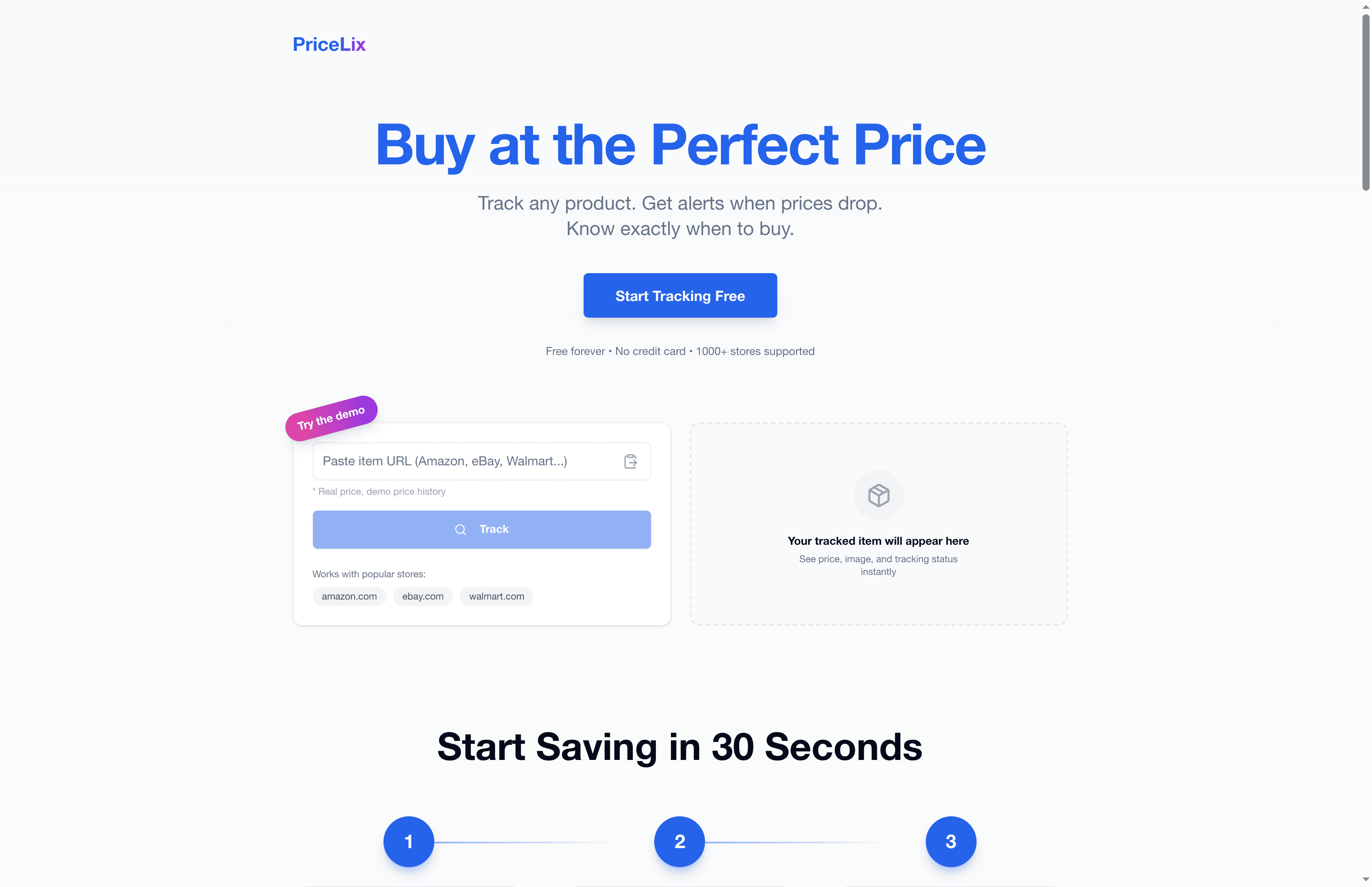
Take control of your online shopping with PriceLix, the ultimate price tracking and comparison platform designed to empower you against unpredictable price swings. Our user-friendly dashboard helps you monitor prices across Amazon, Walmart, eBay, and over a thousand other stores without wasting time manually checking every day. Set your personal price targets and receive instant alerts when your favorite products hit the best prices. Start tracking your wishlist now to avoid falling for artificial urgency and costly impulse buys. Don’t just shop reactively—shop smart and save big by visiting PriceLix today and experience effortless savings through real-time price intelligence.
Frequently Asked Questions
What is real-time pricing?
Real-time pricing refers to the dynamic adjustment of product prices by retailers based on immediate market conditions such as supply, demand, competitor pricing, and inventory levels. Prices can fluctuate multiple times per hour.
How can I benefit from understanding real-time price changes?
By understanding real-time price dynamics, you can strategically time your purchases, potentially saving between 15% to 40% on annual shopping expenses. Tracking prices can help you recognize genuine deals and avoid paying more than necessary.
What factors influence price changes in real-time?
Price changes are mainly influenced by supply and demand imbalances, competitor pricing moves, inventory levels, seasonal trends, and forecasting errors. These factors prompt algorithms to adjust prices accordingly to maximize profitability.
How can I effectively track prices to avoid overpaying?
Using price tracking tools is key. These tools monitor historical price data, send alerts when prices hit your target, and provide insights into trends, helping you to make informed decisions without emotional pressure from urgency or scarcity.